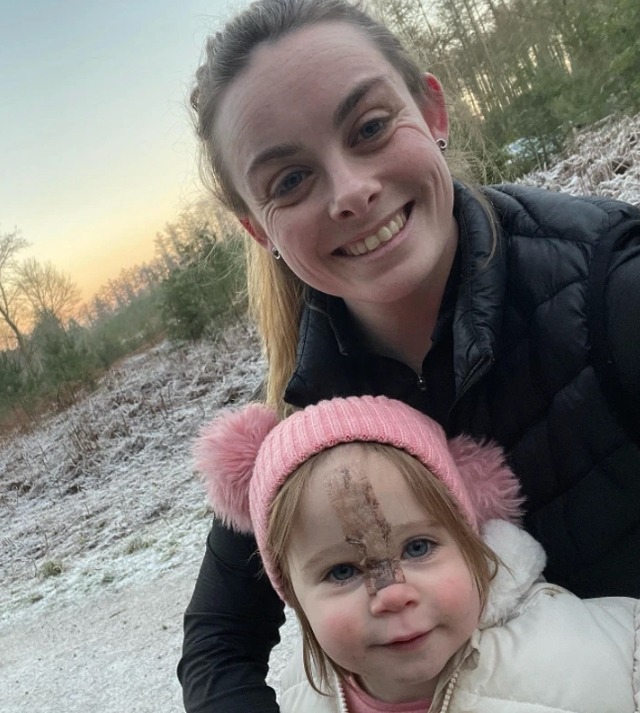
A mother’s determination to address her daughter’s rare birthmark—despite initial resistance from medical professionals—highlights the complexities of parental advocacy in healthcare. Celine Casey’s daughter, Vienna Shaw, was born with a congenital melanocytic nevus (CMN), a birthmark that appears in only one in every 20,000 newborns, prominently located on her forehead. Concerned about the potential social and emotional impact as Vienna grew up, Casey was firm in her decision to have it removed, driven by the desire to prevent her daughter from feeling different and possibly resenting her parents for not acting.
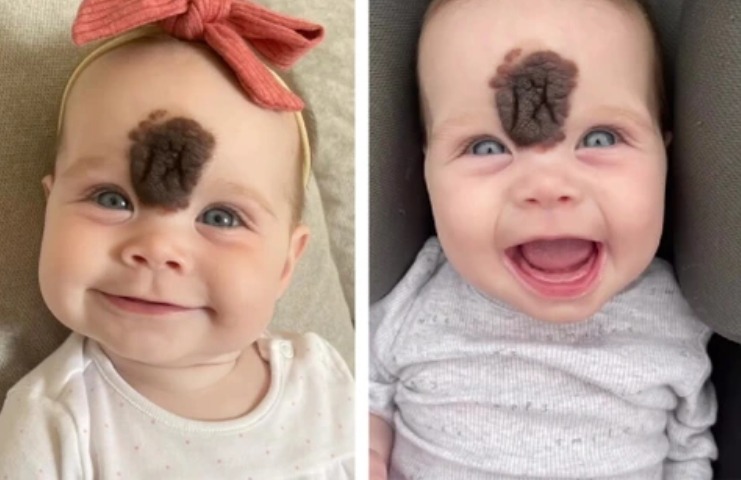
When the family sought medical intervention through the NHS, they were disappointed when doctors categorized the removal surgery as a cosmetic procedure and refused to proceed. This stance sharply contrasted with the parents’ genuine concerns about potential bullying and Vienna’s future emotional well-being. Undeterred, Casey and Vienna’s father, Daniel Brookshaw, decided to raise the necessary funds privately. Their crowdfunding efforts were successful, raising \$52,000 in just 24 hours and eventually reaching their increased goal of \$79,000 to cover hospital expenses.
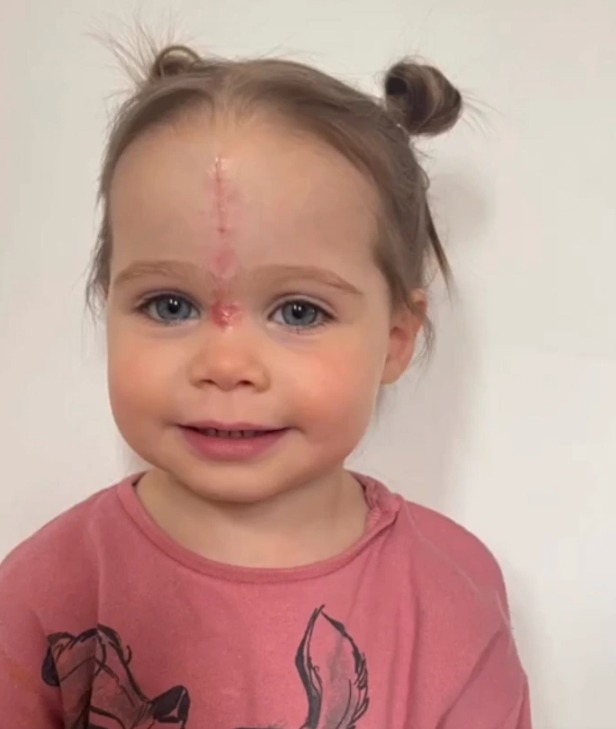
The parents’ proactive approach led to further disagreements with the medical team. While Casey and Brookshaw pursued surgical removal, the initially consulted surgeon refused, arguing that Vienna should make the decision herself when she was older. A dermatologist agreed, emphasizing that the birthmark posed no health risks and was non-cancerous. Despite these medical opinions, the parents persisted, prioritizing their concerns over Vienna’s social integration and emotional health above the principle of future autonomy.
Eventually, Vienna underwent surgery at the age of two, and the birthmark was successfully removed, leaving only a faint scar. Her mother, Celine, has regularly shared updates on Vienna’s recovery on social media, with many followers commenting on the little girl’s beauty. Though the birthmark is gone, the family continues to travel for follow-up appointments to monitor the healing process and determine if further procedures are needed. Now, Vienna enjoys the typical life of a young child.
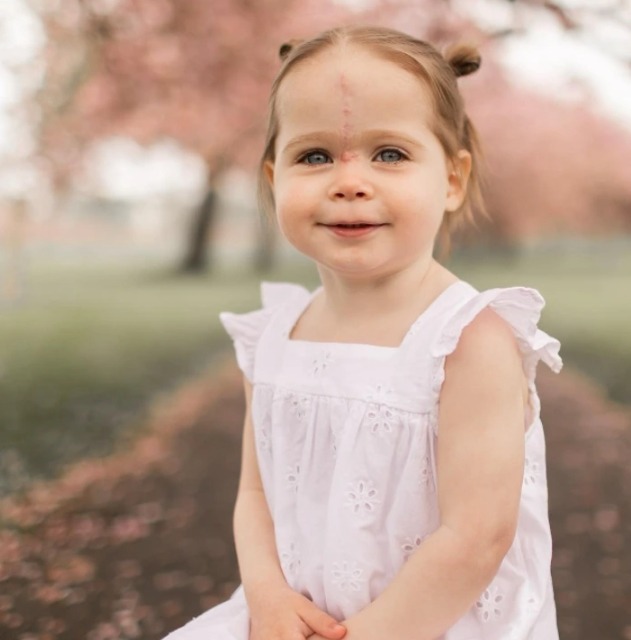
This case underscores the delicate balance between parental advocacy for a child’s well-being and the medical emphasis on a child’s future autonomy in medical decisions. While Vienna’s parents were motivated by a desire to ensure her social acceptance and emotional health, the medical team emphasized the importance of respecting her future right to make decisions about her own body. The successful removal of the birthmark marks the culmination of her parents’ determined efforts, but the differing perspectives highlight the ethical considerations inherent in situations like this.