I Had No Idea Baby Teeth Could Do So Much

I was completely blown away when I discovered baby teeth stem cell banking—the idea that those tiny teeth might someday heal injuries or fight serious diseases. Apparently, these little treasures contain something called SHED cells, which have the potential to regrow dentin and even form bone. If that sounds futuristic, well, it is. But a few companies already offer to freeze those cells just in case we need them in the future.

A Potential Life-Saver?

At first, I thought it was some internet rumor. But then I read about how stem cells in baby teeth could help repair damage caused by chemotherapy or certain diseases. Don’t get me wrong, not every dentist or scientist is totally convinced. Even one leading expert, Dr. Pamela Robey, suggested it might be too early to bank every tooth. Still, the fact remains: baby teeth stem cell banking isn’t just science fiction anymore. Who knows where the research might lead?

Source: Freepik

The Cost vs. The Possibilities

Like most cutting-edge medical ideas, this isn’t cheap. Services such as Store-A-Tooth and ToothBank can charge upwards of $1,700 just to get started—plus yearly fees. That’s a lot of money, especially if we have no clue when (or if) these cells will prove beneficial. Yet, for parents who want “biological insurance,” baby teeth stem cell banking could be worth every penny if it ends up saving a life. It’s a gamble, sure, but some believe the payoff could be huge.

Where Science Is Headed

A 2018 University of Pennsylvania study showed that dental tissue can indeed be generated from baby teeth. That’s no small feat! But experts caution it’s too soon to treat these cells as a guaranteed fix for everything from leukemia to bone injuries. Even so, you can’t help but wonder if we’re on the verge of a breakthrough. If baby teeth stem cell banking pans out, parents might find that saving those little pearly whites was one of the smartest decisions they ever made.

Please SHARE this article with your friends and family on Facebook.

Eve and Adam…Funny Story

One day in the Garden of Eden, Eve called out, “God, I have a bit of an issue!”

“What’s troubling you, Eve?” asked God.

“Well, Lord, you’ve given me this incredible garden, the animals, and even that funny serpent, but I’m just feeling unsatisfied.”

“And why is that, Eve?” God inquired.

“I feel lonely, and, honestly, I’m getting pretty tired of eating apples every day,” Eve replied.

God thought for a moment and said, “Alright, Eve, I have an idea. I’ll create a companion for you. I’ll call him ‘man.’”

“What exactly is a ‘man,’ Lord?”

“He’ll be a bit rough around the edges—aggressive, a little self-centered, and he might struggle to fully understand or listen to you. But he’ll be strong, quick, and surprisingly useful for certain things like protecting, running, and gathering food.”

Eve raised an eyebrow and said, “Hmm, sounds… interesting.”

“He’s not perfect,” God admitted. “But he’s better than nothing. There’s just one catch.”

“What’s that?” Eve asked.

“You’ll need to let him believe I made him first.”

I COOKED A FULL FRIDGE OF MEALS, BUT WHENEVER I CAME HOME, IT WAS EMPTY

I COOKED A FULL FRIDGE OF MEALS, BUT WHENEVER I CAME HOME, IT WAS EMPTY — ONE DAY, I RETURNED EARLY AND SAW WHERE ALL THE FOOD HAD BEEN GOING

I used to cook a full fridge of meals, and for years I loved doing it for our family.

Our two children grew up with home-cooked meals and eventually flew the nest, leaving just me and Randy.

But every time I came home, it was as if a culinary tornado had swept through. Every container, every lovingly prepared dish—gone. I’d hoped my husband, Randy, was simply overeating. But GOD, I WAS SO, SO WRONG!

“Where does all the food go?” I asked one night, exhaustion dulling my voice.
He shrugged. “I was really hungry.”
It became a pattern: I’d cook, the food would vanish, and his explanations grew flimsier. But after 12-hour hospital shifts, I was too tired to argue.

Then, one evening, feeling unwell, I came home early. The house pulsed with loud music. In the kitchen, I froze as it became crystal clear why I was always left hungry when I came home after work.
“WHAT THE HELL ARE YOU DOING?!” My voice thundered through the loud music.

Randy whipped around, his face paling as he stood frozen in place. But he wasn’t alone.

Three of his friends—grown men, beer bottles in hand—were gathered around my kitchen table, stuffing their faces with MY food. Empty containers were scattered everywhere, and my once-full fridge? Completely raided.

I clenched my fists. “So this is where it’s been going?“

One of the guys had the audacity to smirk. “Hey, you make damn good lasagna, lady.“

Randy chuckled nervously, standing up as if to smooth things over. “Babe, relax. It’s just the guys. You know how much they love your cooking!“

I could feel the heat rise to my face. “MY cooking?! I spend hours meal prepping so we can eat throughout the week, and you’ve been feeding your freeloading buddies like I’m running a restaurant?“

One of them scoffed. “Geez, it’s just food—“

“JUST FOOD?!” I snapped, grabbing the closest container and hurling it into the sink. The loud clank shut them up real quick. “I work my ass off for us, Randy. Not for a bunch of grown men who refuse to buy their own damn groceries!“

Randy stammered. “Honey, come on, don’t be dramatic—“

That was it. I turned on my heel, marched to the hallway, and yanked open the coat closet. “Since you’re such a generous host, why don’t you all enjoy your little dinner party somewhere else?” I threw his coat at him. “Get. Out.“

“Wait, wait—” he started, but I was already pushing him toward the door. His friends awkwardly stood, realizing the fun was over.

“I SAID OUT!“

I didn’t even give him a chance to argue. I shoved him and his buddies outside and slammed the door in their stunned faces.

For the first time in months, I finally had a full fridge again.

And a week later? I had divorce papers, too.

Păstrează bine această rețetă, pentru că este ca un tezaur pe pământ. I-am trimis-o celor care mi-au spus „Bună”.

Prima Metodă

Ingrediente:

  • 1 cană de lapte praf
  • 1 cană de zahăr pudră
  • 1 lingură de unt topit
  • 1/4 cană de apă fierbinte

Procedură:

  1. Într-un blender sau robot de bucătărie, adaugă laptele praf, zahărul pudră, untul topit și apa fierbinte.
  2. Mixează bine până obții consistența dorită. Dacă amestecul este prea lichid, adaugă puțină apă suplimentară.
  3. Toarnă laptele condensat într-un borcan ermetic și păstrează-l la frigider.
  4. Se poate folosi pentru a prepara înghețată și multe alte rețete.

A Doua Metodă

Ingrediente:

  • 1 cană de lapte integral lichid
  • 1 cană de zahăr
  • 2 linguri de unt nesărat
  • 1/2 linguriță de vanilie (opțional)

Mod de preparare:

  1. Într-o cratiță de dimensiuni medii, adaugă laptele și zahărul.
  2. Încălzește la foc mediu, amestecând constant până când zahărul se dizolvă complet.
  3. Redu focul la minim și lasă amestecul să fiarbă încet. Amestecă din când în când pentru a evita lipirea sau arderea; nu lăsa să fiarbă cu bulgări.
  4. Lasă amestecul să se gătească la foc mic timp de 30 până la 45 de minute sau până când se îngroașă și se reduce aproximativ la jumătate din volumul inițial.
  5. Odată ce amestecul este gros, ia-l de pe foc.
  6. Adaugă untul și vanilia (dacă dorești) și amestecă până când untul se topește și se integrează complet.
  7. Lasă laptele condensat să se răcească complet.
  8. Toarnă-l într-un recipient curat sau într-un borcan ermetic și păstrează-l la frigider. Se va îngroșa suplimentar la răcire.

Notă: Acest lapte condensat făcut în casă se poate păstra la frigider până la o săptămână. Înainte de utilizare, amestecă-l bine, deoarece se poate separa puțin în timp.

Stories of Life: Inspiring Lessons We Can All Learn From

Life’s biggest lessons don’t always come from grand, dramatic events; they can be found in ordinary moments if we’re open to seeing them.

What if the stains you saw weren’t on someone else’s laundry, but on your own window? How does a broken vase reveal the secret to a happy marriage? Can two apples teach us not to judge too quickly? These short yet powerful stories uncover unexpected wisdom in everyday situations, offering lessons about kindness, patience, and the way we see the world.

1. Laundry with Stains
A woman looked out the window and saw her new neighbor hanging laundry to dry. But something was off: there were stains all over it.

She called out to her husband, “Hey, come look! Our new neighbor was a real disaster. She didn’t even know how to wash her laundry properly!”

Later, she told all her friends about the neighbor. “I swear, she couldn’t even wash her laundry right!”

Time passed, and once again, the woman saw her neighbor hanging laundry, and, yep, still stained.

She ran to her friends to gossip some more, and this time, they decided to see for themselves. They all gathered outside to take a look.

But when they saw the laundry, it was spotless, bright white, not a single stain.

One of her friends looked at her and said, “Before you start judging someone else’s laundry, maybe you should have cleaned your windows. Those things were filthy!”

2. A Happy Family
In one town, there were two neighboring families. One couple was constantly arguing, blaming each other for everything that went wrong and fighting to prove who was right.

The other couple lived peacefully, with no arguments or scandals.

The more stubborn wife was baffled by the happiness of her neighbors. She envied them.

She said to her husband, “Go see how they managed to make everything go so smoothly and quietly.”

Her husband went over to the neighbor’s house and hid under the open window. He watched and listened carefully.

The wife was tidying up the house, dusting off a precious vase. Suddenly, the phone rang. She got distracted and set the vase on the edge of the table. Just then, her husband walked into the room, bumped the vase, and it fell, shattering on the floor.

The neighbor thought, “Oh no, what was going to happen now?”

Instead, the wife walked over, sighed, and said to her husband, “Sorry, my dear. It was my fault. I placed the vase too close to the edge.”

The husband responded, “What are you talking about, sweetheart? It was my fault. I was rushing and didn’t notice the vase.”

She replied, “No, it was my fault. I wasn’t paying attention. Well, as they say, let it be for good luck!”

The neighbor’s heart ached. He returned home, troubled.

His wife asked, “You seem so upset. Did you figure out how they did it?”

He said, “Yes, in their house, everyone was willing to take the blame. That was why they didn’t argue. But in our house, everyone was always trying to be right.”

3. Two Apples: A Lesson in Not Jumping to Conclusions
A little girl came inside holding two apples. Someone had probably given them to her.

“Mom, look at these beautiful apples!” she said excitedly.

“They are indeed lovely! Will you share one with me?” her mom asked.

The girl looked at the apples, then took a bite of one. After a moment of thought, she bit into the other apple as well.

The mother was very surprised and thought to herself, “What a greedy little girl I’m raising! She’s eating both apples and didn’t offer me even one!”

But to her surprise, the little girl handed one of the apples to her mom and said, “Mommy! Take this one. It’s sweeter!”

4. Bad Words
Two friends had a falling out, and one of them started telling everyone bad things about the other.

But later, he calmed down and realized he was wrong, so he went to his friend to apologize.

The other friend said, “Alright! I’ll forgive you—but only on one condition.”

“What condition?”

“Take a pillow and release all its feathers into the wind.”

The first friend did as he was asked. He tore open the pillow, and the feathers flew everywhere. The wind carried them all across the area.

The satisfied friend came back and said, “I’ve completed your task. Am I forgiven now?”

“Yes, if you manage to collect all the feathers and put them back into the pillow.”

But, as you can imagine, it’s impossible to gather all the feathers back.

Just like bad words, once they’ve spread and been heard by others, you can’t take them back.

5. The Red Rose
A sailor received letters from a woman he had never met. Her name was Rose. But he still wrote her back, and they continued doing so for a long time.

As he read her letters and replied, the sailor realized he could not imagine his life without her. When his service ended, they arranged to meet at a train station at 5 o’clock.

Rose wrote that she would be wearing a red rose on her lapel.

The sailor hesitated because he had never seen Rose, not even in a photo. He didn’t know how old she was, whether she was beautiful or not, or if she was tall or short.

He arrived at the station exactly at the agreed time, and under a big clock stood a woman with a red rose in her lapel. She was around 50 years old.

The sailor was tempted to turn around and leave, but then he thought that would be unfair. This woman had written to him all the while he was at sea. She didn’t deserve that.

So, he walked up to her, extended his hand, and introduced himself.

But the woman said, “My name isn’t Rose. The young woman named Rose is standing behind me.”

The sailor turned around and saw her. She was young and beautiful.

The older woman explained that Rose had asked her to wear the flower in her lapel. If the sailor had turned away, their story would have ended there.

But if he approached the older woman, she would introduce him to the real Rose and tell him the whole truth because looks aren’t everything.

6. Dandelions
A man took great pride in his beautiful, green lawn. One day, he noticed dandelions had bloomed among the grass.

He hadn’t planted those dandelions, so he saw them as weeds. Immediately, he pulled them out by hand. But after a short time, the dandelions appeared again.

No matter how hard the man tried, the dandelions kept coming back, growing more vigorously with each attempt to remove them.

Finally, he wrote a letter to a well-known agronomist. He listed all the methods he had tried to get rid of the dandelions and ended the letter with this question:

“I’ve tried everything. Can you suggest a method I haven’t yet tried?”

Soon, he received a reply:

“Yes, there is a method you haven’t tried: I suggest you learn to love them.”

Moral
Sometimes, the things we fight the hardest are the things we need to accept. Just like the man battling dandelions on his lawn, we struggle against what we don’t understand.

The woman judging her neighbor’s laundry didn’t see her own dirty windows, reminding us that our own flaws can blind us. The feuding couple learned that being right was less important than being kind.

The little girl with two apples taught us that things aren’t always what they seem, and judging too quickly can lead us astray. Like the sailor and the red rose, true connection comes from looking beyond appearances and accepting others for who they are.

And just as words are like scattered feathers that can’t be retrieved, we must accept the consequences of our actions. If we can learn to accept life’s imperfections, both in ourselves and in others, we might find a peace we never thought possible.

Bad news for drivers over 65: they will no longer be able to drive due to…

After reading the article, we invite you to share your opinion in the comments. As we age, our physical and cognitive abilities deteriorate. This also causes changes in our driving habits, which can affect our behavior on the road and become potentially dangerous. Driving skills tests are not currently mandatory, but they are strongly recommended so that older people can retain their driver’s licenses.

Residents of La Rochelle were shocked. On Wednesday, June 5, a traffic accident occurred at an intersection near the city center, involving a group of 12 children from a recreational center and an 83-year-old driver. During a school outing, the approximately 80-year-old woman ran over the children with her car, causing seven injuries, three of them serious. A local resident reported that she was coming from the wrong direction. A judicial investigation has been launched.

Young people and older adults are often at the center of debates about driving licenses. Although the government approved lowering the minimum age to 17 last June, the issue of the driving ability of people over 75 has been raised several times, especially after these types of accidents. However, for the moment there are no plans to introduce mandatory driving ability tests for older people. In July, a bill was introduced that would require periodic medical examinations so that older people could retain their driver’s licenses for life. However, three months later, Clément Beaune, the Minister of Transport, clearly rejected this proposal and said “no” to an “expired driving license.”

Drivers over 65 risk losing their license: here is the new measure that is causing concern

According to road safety information, people over 75 have the same probability of being involved in traffic accidents as those aged between 18 and 24. Over time, we lose our mobility, vision, and hearing, and our perception of distance changes. In addition, taking medications makes it more difficult to be in a fit condition to drive. Remember that a Class B driver’s license is valid for life and can only be revoked in cases of infractions or offenses.

Is there then a legal regulation in France to check the driving ability of older people? No, the Traffic Law does not provide for any mandatory driving test or any medical assessment for older drivers, either on a one-off or periodic basis. There are no specific rules based on age, confirms Bruno Garancher, president of the Association of National Training Institutes (Unedic), with the exception of vehicles weighing more than 3.5 tonnes.

However, there is the possibility of undergoing voluntary driving tests. If people over 75 feel that they are having difficulties driving, they can consult their general practitioner or an authorized doctor who will conduct sensory, psychomotor, and cognitive tests. The specialist, who can also be contacted by close family members, decides on the driver’s fitness to drive during the day only, and gives advice on medication use or physical ailments, etc.

Road safety recommends refresher courses
Road safety also recommends taking occasional refresher courses if the driver’s license was obtained a long time ago. The goal is to familiarize oneself with new traffic regulations and to provide the specialist with the opportunity to evaluate one’s driving technique.

Driver’s license: a new blow for senior drivers

Driving license: a new setback for senior drivers. Awareness campaigns can also be very useful. Organizations offer workshops, meetings, and other regional events aimed at raising awareness about the main dangers of traffic and reminding people of the basic traffic rules. These activities also include advice on modifying or adapting the vehicle, for example, switching from a manual to an automatic transmission. Driving schools also offer special courses for older people to ensure more detailed support from the driving instructor.

Sad Obama Family News

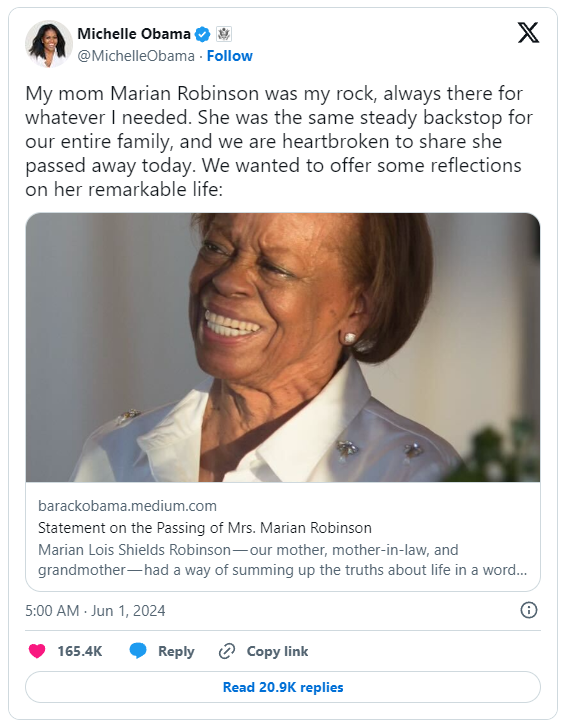
Michelle Obama’s Mom has passed away according to reports by family members. She was 86 years old. A family statement said she passed peacefully this morning.

“My mom Marian Robinson was my rock, always there for whatever I needed,” the The Former First Lady posted on X on Friday. “She was the same steady backstop for our entire family, and we are heartbroken to share she passed away today.”

Family vacation packages

The Former President Obama also posted on X, “There was and will be only one Marian Robinson,” he added. “In our sadness, we are lifted up by the extraordinary gift of her life. And we will spend the rest of ours trying to live up to her example.”

Marian Robinson, who was born Marian Lois Shields on July 30, 1937, is the mother of Michelle Obama, the former First Lady of the United States.

She was married to Fraser Robinson III and is the grandmother of Malia and Sasha Obama. Marian Robinson played an important role in her family’s life, particularly during her daughter Michelle’s time in  the White House.

In her early adulthood, Marian married Fraser Robinson III, a World War II veteran who worked as a pump operator for the Chicago Water Department. The couple settled into a modest home in the South Side of Chicago and had two children, Craig and Michelle. Fraser’s job, while stable, required long hours, which left Marian to manage the household and care for their children. She instilled in them the importance of integrity, education, and perseverance.

The family talked about the way Mrs. Robinson watched her parents deal with the limitations of racial segregation. Her father, Purnell Shields, could not be in a union or work for certain construction outfits due to his skin color.

Marian Robinson lived in the White House during Barack Obama’s presidency in order to help support the First Family, especially with her granddaughters. She was praised for providing a sense of normalcy and stability for Malia and Sasha during their formative years in the public eye. Marian was often seen as a grounding force in the Obama family, maintaining a low profile despite the high visibility of her daughter and son-in-law.

After the White House in early 2017, Michelle’s Mother spent her final years living in Chicago.

Bob’s Fortune and the Unexpected Twist

When Simpleton Bob found out he was going to inherit a fortune when his sickly father died, he decided he needed a woman to enjoy it with.

So one evening he went to a singles bar where he spotted the most beautiful woman he had ever seen.

Her natural beauty took his breath away.

“I may look like just an ordinary man,” he said as he walked up to her,

“But in just a week or two my father will die, and I’ll inherit 20 million dollars.”

Impressed, the woman went home with him that evening.

Three days later, she became his stepmother.

My Husband Didn’t Save Me Any Food for Dinner While I Was Feeding Our Newborn Son

Five weeks ago, my life changed in the most beautiful yet challenging way—I became a mother. My son became my entire world. But amid this overwhelming love, a dark cloud hovered over our happiness—my mother-in-law.

When we brought our baby home, she planted herself in our living room, turning it into her headquarters. My husband insisted she was here to help, but instead, she became another source of stress.

She filled our home with visitors, contributing to the chaos rather than alleviating it. Despite this, I bit my tongue, choosing silence over confrontation, all for the sake of peace.

For illustrative purposes only

Amidst the endless cycle of feeding, changing diapers, and soothing my son to sleep, I found little time for myself, often going hours without food. My mother-in-law, claiming that she was there to cook, didn’t extend her support to actually helping with the baby. Eventually, I was exhausted and hungry, clinging to the hope that at least I wouldn’t have to worry about meals.

For illustrative purposes only

Last night shattered that last vestige of appreciation I had for her so-called help. After a long evening spent breastfeeding, I emerged from the nursery, expecting to find a plate saved for me, only to be met with indifference from my husband and outright disregard from his mother.

The coldness in her voice as she informed me there was no food left because she assumed I wasn’t hungry cut deeper than any physical hunger I felt. In that moment, my frustration boiled over. The argument that ensued was heated and bitter, revealing the deep fissures in our family dynamics.

For illustrative purposes only

My husband’s defense of his mother, coupled with his outrage at my reaction, made it painfully clear that I was alone in this struggle. On top of it all, he even expected me to wash the dishes as well. Feeling utterly unsupported and unseen, I made the decision to leave, seeking refuge in my mother’s home. The calm and care I found there stood in stark contrast to the turmoil I left behind.

For illustrative purposes only

Yet, even here, where I thought I would be safe, the conflict followed. My husband’s relentless calls and messages, each more accusatory than the last, painted me as the villain in this scenario. His inability to understand my perspective, to see the toll his mother’s presence and his lack of support took on me, was disheartening. The narrative he spun to his family, that I was keeping our son from him over a trivial matter like food, only added to my sense of isolation.

For illustrative purposes only

As I tried to navigate through these swirling emotions, the bond with my son remained my anchor. His innocent dependence on me, his warmth, and his trust, fortified my resolve to seek a better environment for us both, even if it meant standing against the expectations and demands of my husband and his family.

For illustrative purposes only

In the quiet of my mother’s house, with my son cradled close, I pondered our future. The path forward seemed daunting, fraught with difficult conversations and decisions. Yet, in the face of this adversity, I knew I had to advocate for myself and my son, to strive for a life filled with the love, respect, and support we deserved.

In a moment of sheer desperation, I reached out to the one person I hadn’t considered before — my father-in-law. Through tear-blurred eyes and with a trembling voice, I poured out my heart, detailing every strain and stress that had pushed me to my limit. To my surprise, he didn’t just offer words of comfort; he took immediate action.

For illustrative purposes only

Within the hour, we were standing together at my house’s doorstep, his usually gentle demeanor replaced with a stern resolve that I had rarely seen. He didn’t spare a moment for pleasantries, bypassing me to confront the heart of the turmoil — his son and wife, seated obliviously in front of the TV. The air grew heavy with anticipation as he declared, “This ends now,” a simple yet powerful decree that commanded attention.

He turned to my husband first, his voice a mix of disappointment and authority, “You will wash the dishes every night from now on. Your wife needs your support, not your neglect.” The shock on my husband’s face was palpable, a visible sign that the weight of his father’s words had struck a chord.

Then, without missing a beat, he addressed his wife, my mother-in-law, with a clarity and firmness that left no room for negotiation. “And you, it’s time to go home. Your ‘help’ here is doing more harm than good.” The impact of his words on her was immediate; the usually unflappable woman was reduced to a silent, stunned figure, her protests dying before they could even begin.

For illustrative purposes only

With the air still echoing his pronouncements, my father-in-law turned to me, a softness returning to his gaze, “Now, let’s go get you a proper meal.” That dinner was a welcome pause in the storm where understanding and compassion filled the gaps worn by weeks of tension. It was a balm to my frayed nerves, a gesture of solidarity that I had sorely missed.

Back home, the reality of my father-in-law’s intervention began to take root. My husband, confronted with the undeniable truth of his neglect, took to the dishes — a symbolic act of taking responsibility not just for the cleanliness of our home, but for the well-being of our family. It was a turning point, one that reshaped the dynamics of our household.

For illustrative purposes only

The changes were gradual but undeniable. My husband emerged as a more present and supportive partner, actively participating in the care of our son and the myriad tasks that keep a home running smoothly. My mother-in-law’s presence in our home, once a source of constant stress, became a rare and much more welcome occurrence. Her visits, now infrequent, were no longer invasions but genuine attempts to connect and contribute positively to our family life.

This transformation, sparked by the bold yet necessary intervention of my father-in-law, brought about a sense of peace and respect that had been missing. The support I had longed for was finally manifesting, not just in the physical help around the house but in the emotional solidarity that now characterized our family. It was a stark reminder of the power of understanding and the profound impact of taking a stand for what’s right.

For illustrative purposes only

In the end, the turmoil that had once seemed insurmountable became the catalyst for a deeper connection and appreciation among us all. My husband’s efforts to amend his ways and my mother-in-law’s adjusted approach to her visits painted a hopeful picture of our future — a future where support, respect, and love were no longer scarce commodities but the foundation of our home.

How would you have dealt with this situation? Let us know on Facebook.

Source: news.amomama.com

I Found a Mysterious Ring in My Husband’s Car That Turned My Life Upside Down

When Patrick, my husband, begins paying more attention to his phone than to me, I suspects him of cheating. Then, things get heated when I finds a mysterious ring under the seat of his car.

Lately, everything about my husband seemed off. Patrick, usually an open book to me, had become a mystery. He went from not caring about his phone when we were together to being glued to it, guarding it like a precious secret.

I’ve been eating alone most nights because Patrick has been shut up in our study, claiming to work, when in reality, I could hear him whispering on the phone.

For illustrative purposes only

“What’s going on, Patrick?” I asked him after enduring the same cold routine for two weeks.

“Work is demanding, Jane,” he said, maintaining eye contact. “It’s going to settle down soon, I promise.”

Usually, Patrick would sit down with me and discuss his work, but he retreated to the study with a mug of coffee instead.

It wasn’t just the distance between us—it was the silence, the unspoken words that filtered through our home.

For illustrative purposes only

A few days after that conversation, Patrick told me to use his car for work.

“Use mine, darling,” he said, after I mentioned that stopping at a gas station would make me late for work. “I filled it up last night.”

I got into Patrick’s car, breathing in the familiar scent of his cologne mixed with the worn leather seats.

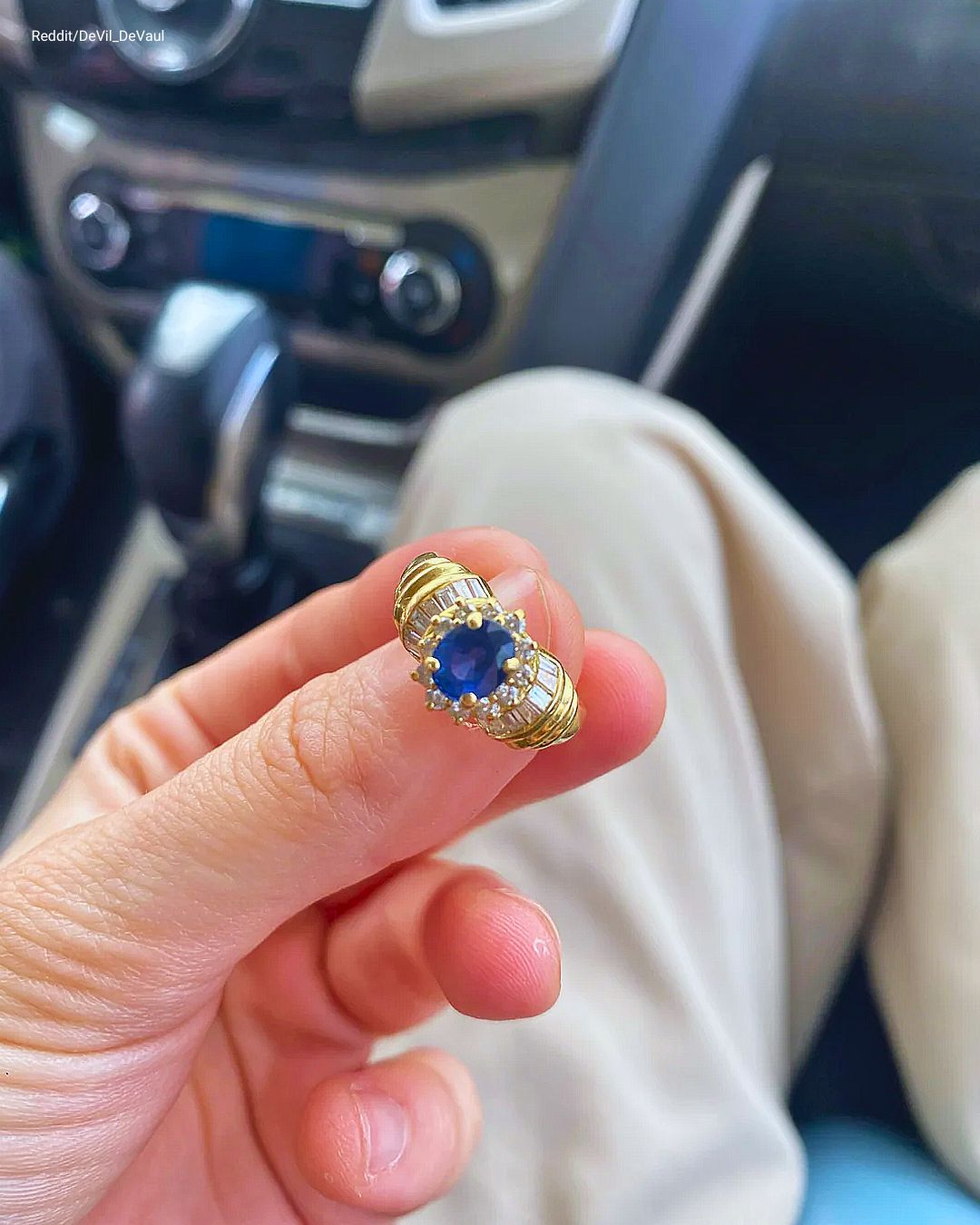
While adjusting the driver’s seat, I found it—a beautiful ring hidden beneath the seat, in a velvet box.

It wasn’t mine, that much was clear.

But it was absolutely stunning, and there was a familiar sense to it. The delicate design and the way it shimmered in the light made my heart sink.

Whose ring was it?

I started the car and began driving to work, while questions started to flood in. Was there someone else? Had Patrick’s late nights and guarded phone been for another woman? Who was at the end of his hushed phone calls?

I walked into my office feeling the weight of Patrick possibly cheating on me. My 30th birthday was coming up soon, and Patrick told me that he planned something big.

But what if he wouldn’t be around long enough to celebrate with me? What if he was going to leave me for someone else?

In a fit of anger—or perhaps desperation, maybe even revenge—I came up with a plan. If this ring belonged to the other woman in Patrick’s life or was intended for her, then I wanted her to feel a fraction of the pain I was going through.

So, I took my bottle of habanero sauce — a staple for all my meals at work, and drenched the ring in it. After it dried, I put the ring back where I found it, waiting for the storm I was sure would follow.

Then, I took my stethoscope and began to see my patients.

When I got home, Patrick was cooking dinner, but the moment he switched the stove off, he put on his shoes.

“I need to see my Mom; she wanted some help with things around the house. I’ll be home soon,” he said, walking out the door.

For illustrative purposes only

I paced around the house, waiting for something to happen. I almost phoned Patrick’s mother to see if he had really gone to her.

“Keep it together, Jane,” I told myself, and helped myself to dinner.

My phone rang, pulling me away from my thoughts—I needed to be alert, in case it was a medical emergency for one of my patients.

Instead, it was Monica, my best friend, her voice tinged with panic.

“Jane! I need your help!” she exclaimed into the phone, barely pausing to breathe.

“What’s wrong?” I asked calmly.

For illustrative purposes only

“I put on a piece of jewelry, and it feels like my hand is on fire. What do I do? It’s never happened to me before! It’s so bad!”

Her words were a shock to my system. It couldn’t be a coincidence.

So, the woman I suspected my husband of cheating with was not a stranger but my best friend?

I needed answers.

After calming Monica down and suggesting that a quick fix would be to put her hand into plain yogurt, I asked her, tentatively, why she was in such agony.

“I… I don’t know, Jane. It just started a few seconds after I put the ring on. Patrick didn’t know what to do either, so he said to call you,” she said, gasping when she realized she had given herself away.

For illustrative purposes only

“My goodness, Monica. Why are you with Patrick? Please, just tell me.”

There was a pause. A brief moment of hesitation before she admitted the truth.

“It’s not what you think, Jane. Patrick and I have been planning your surprise party. The ring is for you. It’s a family heirloom from Patrick’s side, and he wanted you to have it. He showed it to me now because he had just gotten it cleaned. I just wanted to try it on.”

The pieces of the puzzle finally came together. All the late nights, the secrecy, Patrick’s attachment to his phone—it was all for me. In my haste to judge, I had almost destroyed the trust and love we had built over the years.

I told Monica to get Patrick to bring her over so that I could look at her hand. When they came home, I told them everything—the guilt was overwhelming, but I knew I had to make things right.

For illustrative purposes only

“It’s okay, Jane,” Monica reassured me. “We should have mentioned something sooner. I’m just glad that we can clear this up now.”

I spent the next few days planning a special dinner for the three of us, wanting to make sure that Patrick and Monica knew that I wasn’t harboring any hard feelings.

“I need to apologize to both of you. I let my insecurities get the best of me and jumped to the worst conclusions.”

My husband reached across the table, taking my hand in his.

“It’s okay, love. What matters is that we’re honest with each other now. Here, I want you to have this.”

For illustrative purposes only

Patrick presented the ring again—cleaned and its sparkle undiminished by the ordeal.

“You can have it now, instead of on your birthday,” he grinned.

My bonds with Patrick and Monica were definitely tested, but in the end, the truth made us stronger together.

And, I still have my birthday party to look forward to.

What would you have done?

Source: Amomama