Police Detain Florida Man Over Bomb Threat Targeting Trump

In an unsettling development that has captured national attention, authorities in Florida detained a man accused of making a bomb threat against President Donald Trump during a 9-1-1 call.

This case not only highlights the volatile mix of political rhetoric and personal instability but also raises serious questions about national security, the role of mental health in criminal behavior, and the measures needed to protect public officials. The suspect, who used the alias “Justin Blaze” during the call, has now found himself facing a series of charges that carry significant implications for both his future and the nation’s approach to politically charged threats.

In this article, we will unpack every facet of this incident—from the details of the 9-1-1 call to the legal charges, the suspect’s troubled background, and the broader societal and policy impacts. We’ll examine how law enforcement is handling the situation, what experts say about the threat level, and how this event fits into the larger picture of threats against public figures in an era marked by political polarization.


I. Overview of the Incident

A. The Startling 9-1-1 Call

On a seemingly ordinary Friday afternoon, Palm Beach County law enforcement responded to a 9-1-1 call that quickly turned into a scene from a thriller. The caller, who identified himself as “Justin Blaze,” made a series of chilling declarations during the conversation. In a voice recorded for posterity, he claimed that he intended to kill President Donald Trump using a nuclear bomb—a threat that sent shockwaves through the community and set off alarms in national security circles.

According to initial reports, the caller described himself as a “revenge-driven Confederate soldier,” and his narrative grew increasingly erratic as he detailed plans to hack into missile silo systems and launch nuclear missiles aimed at New York. Perhaps the most unsettling part of the call was his bizarre claim that “my missiles are attracted to Donald Trump’s towers,” a statement that blended fantasy with a dangerous fixation on the president’s properties.

B. What Made the Threat So Alarming

Authorities were quick to take action given the gravity of the threat. Beyond the direct claim of using a nuclear bomb, the caller insisted that he needed to be taken to the airport in order to carry out his plan. He repeatedly warned that “tomorrow is his last day on earth,” and even went as far as threatening to burn down houses and openly declared himself a mass murderer. These statements, though delivered in a seemingly frenzied manner, were treated as credible enough to mobilize swift law enforcement action.

A probable cause affidavit later detailed these alarming statements, providing law enforcement with the basis to arrest the suspect and press serious charges. While some might dismiss such statements as the ramblings of a disturbed mind, the very mention of a nuclear device escalates the situation to one that national security officials simply cannot ignore.


II. The Suspect: Who is Justin Blaxton?

A. Unraveling the Background

Investigators soon discovered that the man behind the alias “Justin Blaze” is actually Justin Blaxton, a resident of Loxahatchee, Florida. Blaxton’s past, as it turns out, is marred by a series of run-ins with the law. Records show that he has previously been arrested on charges that include larceny, battery, and resisting arrest. His history of criminal behavior points to a pattern of confrontational and impulsive actions, setting a concerning backdrop for the severity of the recent bomb threat.

B. Mental Health Concerns

Perhaps even more troubling than his criminal record are reports that Blaxton has struggled with significant mental health issues. The probable cause affidavit makes note of his “extensive history of mental illness,” a factor that may have contributed to his erratic behavior during the 9-1-1 call. In response, authorities have not only charged him but have also moved to ensure that he receives a thorough mental health evaluation. On March 2, a Petition for a Temporary Ex Parte Risk Protection Order was filed and subsequently granted. This order is meant to safeguard the public while also addressing Blaxton’s potential need for psychiatric intervention.

C. The Choice of Alias: “Justin Blaze”

During the call, Blaxton chose to go by the name “Justin Blaze.” This alias appears to be more than just a pseudonym—it seems designed to evoke an image of rebellion and extremism. By describing himself as a “revenge-driven Confederate soldier,” he taps into a historical narrative laden with symbolism. The use of Confederate imagery in his self-identification adds another layer of complexity to his motivations, suggesting that his threats may be interwoven with extremist ideologies. For many observers, this choice of words is both puzzling and disturbing, as it hints at a desire to create a persona that justifies his violent rhetoric.


III. Legal Proceedings and the Charges at Hand

A. The Charges Explained

Following his arrest, Justin Blaxton has been charged with multiple offenses that reflect the serious nature of his actions. The legal team has brought forward several charges, including:

  • Threatening to Use a Destructive Device: This charge is directly linked to his claim of planning to deploy a nuclear bomb against President Trump.
  • Making a False Report of a Bomb or Explosion: By fabricating a scenario involving a nuclear threat, Blaxton is accused of causing unnecessary panic and endangering public order.
  • Making a False 9-1-1 Call: The act of using emergency services to deliver such a dangerous threat is itself a criminal offense.

Each of these charges carries severe penalties, and together they underscore the gravity with which the justice system views his actions.

B. Bail, Court Appearances, and Legal Strategy

At the time of reporting, Blaxton’s bond has been set at $35,000. This figure allows for the possibility of release pending further legal proceedings, though it comes with the understanding that the charges he faces are among the most serious available under the law. His first court appearance, which took place shortly after his arrest, involved a review of the preliminary evidence and a discussion of the charges. Defense attorneys are expected to scrutinize the circumstances of the call and Blaxton’s mental health background—a factor that could play a crucial role in how his case unfolds.

C. The Importance of the Probable Cause Affidavit

Central to the legal proceedings is the probable cause affidavit filed by the Palm Beach County Sheriff’s Office. This document not only outlines the evidence gathered from the 9-1-1 call but also contextualizes Blaxton’s statements within his broader pattern of behavior. The affidavit is a key piece of evidence that supports the charges against him and will be rigorously examined in pretrial hearings. Its detailed account of the call, including the exact language used by Blaxton, will likely form the basis of arguments about his mental state and his capacity to stand trial.


IV. National Security Implications

A. The Gravity of a Nuclear Bomb Threat

Threats involving nuclear weapons rank among the most severe that law enforcement can confront. The possibility of using such a device—no matter how implausible the plan might seem—is taken very seriously due to the potential for catastrophic damage and mass casualties. In an era when the threat of terrorism and mass violence is a constant concern, any suggestion of a nuclear attack is treated as a red alert. This incident, with its explicit mention of a nuclear bomb, has consequently mobilized federal agencies including the FBI and the Department of Homeland Security.

B. A Historical Perspective on Threats Against Public Figures

This incident is not an isolated one in the annals of threats against high-profile political figures. In recent years, numerous political leaders have faced similar threats, both online and in person. For example, there have been prior attempts on the life of President Trump during his time in office, each underscoring the inherent risks of occupying such a public position. These events serve as a grim reminder of the precarious nature of modern politics and the constant need for robust security measures for public figures.

C. Expert Analysis: Mental Illness vs. Organized Threats

Experts in national security have weighed in on the incident, offering their insights into the credibility and origins of Blaxton’s threat. John Russell, a former Secret Service agent, characterized the call as likely being “the idle rant of somebody who’s mentally deranged.” His comments suggest that while the threat may not be part of a larger, coordinated effort, it nevertheless demands a firm response because of the potential risks involved. Even if Blaxton’s statements are rooted in delusional thinking rather than a genuine capability to carry out such a plan, they cannot be dismissed lightly due to the possible consequences if the threat were ever to be taken up by someone more capable.


V. The Complex Relationship Between Mental Health and Criminal Behavior

A. Recognizing the Role of Mental Health

One of the most critical aspects of this case is Blaxton’s documented history of mental illness. His erratic behavior and extreme statements during the call are indicative of a troubled mind—a condition that law enforcement and mental health professionals are taking very seriously. Comprehensive evaluations will be necessary not only to determine his mental state at the time of the offense but also to decide whether he is fit to stand trial. This case brings to light the ongoing challenge of addressing mental health issues within the criminal justice system, particularly when the actions of an individual have national security implications.

B. Legal Pathways for Mental Health Considerations

In American courts, defendants who struggle with significant mental health issues often face a different legal trajectory than those who do not. While some may receive alternative sentences that focus on psychiatric treatment rather than traditional incarceration, the severity of the charges in Blaxton’s case complicates matters. The balance between ensuring public safety and providing appropriate care for individuals with mental illnesses is delicate. In Blaxton’s situation, the issuance of a temporary risk protection order reflects an effort to manage this balance while also safeguarding the community from potential harm.

C. Broader Policy Implications

Beyond the specifics of this case, there is a broader conversation to be had about how the justice system deals with individuals whose criminal behavior is intertwined with untreated or inadequately managed mental health issues. Lawmakers and mental health advocates are increasingly calling for reforms that would improve early intervention and crisis management. The hope is that by addressing mental health proactively, similar incidents can be prevented before they escalate into dangerous threats against public safety.


VI. Political and Social Reactions to the Incident

A. Voices from Political Leaders

In the aftermath of the bomb threat, political leaders at both the state and national levels have condemned the incident in unequivocal terms. Officials have stressed that no political ideology or personal grievance justifies the use of violent rhetoric or the endangerment of lives. In press conferences, state representatives reiterated the commitment to protecting public figures like President Trump, while also calling for increased resources to combat politically motivated threats. Such statements underline the widespread recognition that threats of this magnitude demand a united and swift response from government agencies.

B. Media Coverage and Public Outcry

Media outlets across the nation have given extensive coverage to the incident, with many emphasizing the bizarre nature of Blaxton’s claims. Social media platforms have been awash with reactions ranging from shock and disbelief to calls for better mental health support and more stringent security measures. The public reaction reflects a broader anxiety about the state of political discourse in the country, where extremist statements—whether born out of genuine belief or delusion—can have far-reaching implications. Many commentators have noted that the incident is a stark reminder of the blurred lines between political protest, extremist ideology, and the consequences of untreated mental illness.

C. Historical Context: Repeated Threats Against the Presidency

This case also fits into a longer history of threats against the presidency. Over the years, several high-profile figures have had to contend with extreme rhetoric aimed at inciting violence. Past incidents, such as the attempted attack at a political rally in Pennsylvania, illustrate how the culture of political extremism can sometimes spiral out of control. These repeated episodes not only underscore the persistent risks faced by public officials but also raise important questions about how society should balance free expression with the need to protect human life.


VII. National Security Measures and the Role of the Secret Service

A. The Critical Task of Protecting the President

The threat made by Blaxton against President Trump reinforces the immense responsibility borne by the U.S. Secret Service. Charged with protecting the president and other top government officials, the Secret Service operates under a mandate that requires constant vigilance. Even when threats appear to originate from individuals with questionable mental health, the potential consequences necessitate a robust, coordinated response from security agencies across the nation.

B. Evaluating the Plausibility of the Threat

Security analysts have taken a close look at Blaxton’s claims, particularly his assertions about hacking missile silo systems and launching nuclear strikes. While many experts agree that the technical aspects of his threat are far-fetched and unlikely to be executable, the danger lies not in the feasibility of his plan but in the psychological impact of such statements. The mere suggestion of using a nuclear bomb against the president has the power to destabilize public sentiment and create widespread panic. As such, even if Blaxton’s threat is dismissed as the rantings of a disturbed individual, it still necessitates a careful and measured response from national security authorities.

C. The Evolving Landscape of Threats

Historically, threats against U.S. presidents have ranged from well-organized plots to isolated, erratic incidents. The advent of modern communication technology—ranging from social media to real-time emergency calls—has transformed the way such threats are both disseminated and detected. Today’s threat landscape is one where even seemingly isolated incidents can garner national attention and prompt swift policy responses. The Blaxton case serves as a modern example of how quickly extremist rhetoric can spread, and how law enforcement agencies must continually adapt their strategies to counter such threats.


VIII. Future Policy Considerations and Legislative Reforms

A. Strengthening Laws Against Bomb Threats

Incidents like these often serve as a catalyst for legislative change. Lawmakers may use the public outcry following the Blaxton case as an impetus to review and potentially tighten regulations surrounding false bomb threats and the misuse of emergency communication systems. Proposed reforms could include enhanced penalties for those who engage in similar behavior, as well as improved mechanisms for tracking and prosecuting individuals who make dangerous, unfounded claims that put public safety at risk.

B. Improving Mental Health Interventions in the Justice System

Another potential area for reform is the intersection of mental health and criminal justice. Given Blaxton’s troubled background, this case brings into sharp focus the need for better mental health support within our legal framework. Future policies might include increased funding for mental health services, more comprehensive crisis intervention programs, and protocols that allow for early detection and treatment of individuals at risk of committing violent acts. The ultimate goal would be not only to punish dangerous behavior but also to address its root causes in a compassionate and effective manner.

C. Balancing Civil Liberties and National Security

Finally, the incident raises enduring questions about how best to balance national security imperatives with the protection of individual civil liberties. While it is essential to take threats seriously and protect public officials, it is equally important that any measures enacted do not unduly infringe upon the rights of citizens. Lawmakers will need to carefully consider how to strike this balance, ensuring that policies designed to enhance security do not lead to an environment of excessive surveillance or suppression of free speech.


IX. Perspectives from Legal and Security Experts

A. Legal Insights into the Charges

Many legal experts view the charges against Blaxton as necessary, given the potential for his actions to incite widespread panic and jeopardize public safety. Attorneys specializing in national security emphasize that even if his statements are later proven to be delusional, they represent a clear violation of laws designed to prevent the use of destructive devices and the misuse of emergency services. The serious nature of the charges serves as a deterrent, signaling that any attempt to weaponize extremist rhetoric through calls to emergency services will be met with rigorous legal consequences.

B. Comments from Former Law Enforcement

Former law enforcement officials have provided their perspective on the incident, noting that while Blaxton’s claims may lack technical feasibility, the language he used is alarming. According to some ex-Secret Service agents, such statements—even if born out of mental illness—are unacceptable because they create an environment of fear and uncertainty. Their commentary reinforces the notion that the threat level should be assessed not just by its practical likelihood, but by its potential to destabilize public trust and safety.

C. The Broader Impact on National Security Policy

Security analysts agree that the Blaxton case is emblematic of a broader trend: in an increasingly polarized political climate, even isolated incidents can have national security implications. As extremist ideologies continue to gain traction on the fringes of political discourse, law enforcement and policymakers are compelled to develop more adaptive and responsive security protocols. The case is likely to influence future policy discussions and shape how agencies like the FBI and the Secret Service manage and mitigate threats in an era of rapid technological change and heightened political tensions.


X. Conclusion: Charting a Path Forward

A. Recapping the Incident and Its Repercussions

The arrest of Justin Blaxton—who made a bomb threat against President Donald Trump using the alias “Justin Blaze”—is a stark reminder of the challenges posed by extremist rhetoric and the unpredictable nature of politically charged threats. From his chilling 9-1-1 call to the serious charges he now faces, every element of this case underscores the complex interplay between mental health issues, criminal behavior, and national security. Blaxton’s alarming claims, combined with his troubled past and the dangerous symbolism of his chosen persona, have forced authorities to take decisive action in order to prevent potential harm.

B. Reflecting on the Broader Implications

This incident is not merely an isolated criminal matter—it resonates on multiple levels. It calls attention to the ongoing debate about how best to address extremist behavior and the importance of early intervention for individuals with mental health challenges. Moreover, it serves as a wake-up call about the persistent threats against public figures in today’s politically charged environment. As lawmakers, law enforcement, and mental health professionals continue to grapple with these issues, cases like Blaxton’s will undoubtedly inform future policies and legislative reforms aimed at safeguarding both public safety and civil liberties.

C. The Road Ahead: Policy, Prevention, and Protection

Moving forward, the implications of this case are likely to influence a range of policy areas. Strengthening laws against false bomb threats, improving mental health interventions, and recalibrating the balance between national security and individual rights will be high on the agenda for policymakers. The Blaxton case reminds us that while threats may sometimes come from isolated and unstable individuals, their impact can be felt on a national scale—and the response must be equally comprehensive and measured.

As the judicial process continues and as authorities further investigate the extent of Blaxton’s claims, the incident will remain a touchstone in discussions about how to best protect public figures without compromising the rights and freedoms that are central to our society. In a time when political polarization and extremist ideologies seem more potent than ever, the case serves as a clarion call for vigilance, thoughtful policy-making, and a commitment to addressing the root causes of such behavior.


In sum, the arrest of Justin Blaxton for making a nuclear bomb threat against President Trump is a multifaceted case that touches on critical issues—ranging from national security and legal accountability to mental health and the preservation of civil liberties. As the community, policymakers, and security agencies continue to work together in the wake of this incident, it is clear that the challenges we face in today’s complex political landscape require coordinated and compassionate responses. Whether through legislative reform or improved mental health services, the lessons learned from this case will play a significant role in shaping how we respond to extremist threats and protect our nation in the years to come.

Stay informed as the case develops and as further legal proceedings and policy debates unfold. The outcome of this case will not only determine the fate of one troubled individual but may also set important precedents for how the nation handles politically charged threats in an increasingly divided era.


This article was written to provide a comprehensive, human-centered analysis of a disturbing incident and its broader implications. It is intended to inform and provoke thoughtful discussion about public safety, legal processes, and the critical need for mental health support in today’s challenging political climate.

Pam Bondi Questions Adam Schiff in a Hearing, Reminding Everyone of His Prior Censure

In what was expected to be a routine confirmation hearing for Attorney General nominee Pam Bondi, the session rapidly devolved into a heated exchange that left both lawmakers and the public reeling. On January 30, 2025, in a Senate Judiciary Committee hearing filled with partisan tension and high stakes, Bondi and Democratic Senator Adam Schiff sparred over key issues related to presidential pardons, workload management, and the accountability of political leaders.

The confrontation reached a boiling point when Bondi took an uncharacteristically direct swipe at Schiff by referencing his own previous censure by Congress. This dramatic moment not only underscored the deeply divided political landscape but also raised fundamental questions about how the next Attorney General would balance legal rigor with practical governance.

In this article, we examine the unfolding of the confirmation hearing, analyze the major points of contention between Bondi and Schiff, and discuss the broader implications for the future of the Department of Justice, presidential pardon policies, and the overall tone of American legal accountability.


I. Setting the Stage: From Routine to Explosive

The hearing began as a standard confirmation session, with Pam Bondi, the former Florida Attorney General, expected to outline her legal philosophy and address procedural questions from senators. Bondi had a reputation for her conservative legal views and strong stance on law and order, and many Republican senators anticipated a measured discussion that would reassure them she was the right candidate to lead the Justice Department.

However, it soon became clear that the hearing would not follow a predictable path. Right from the outset, Senator Adam Schiff (D–CA) posed pointed inquiries about Bondi’s approach to presidential pardons. Schiff’s initial questions were designed to probe whether Bondi would advise the President to reject blanket pardons in favor of a case-by-case review of pardon files—a method that many conservatives have long supported as a means to prevent executive overreach.

Schiff asked, “Will it be your advice to the President: ‘No, Mr. President, I need to review them on a case-by-case basis. Do not issue blanket pardons’?” This inquiry was not merely academic. It sought to gauge Bondi’s willingness to scrutinize potentially controversial presidential decisions—a matter of critical importance given recent debates over executive clemency.

Bondi responded in a measured yet firm tone, stating, “Senator, I have not reviewed any of those files. If confirmed, I will evaluate the files for the pardons as well as the ongoing investigations.” Her reply, intended to reassure the Senate that she would handle each case individually, immediately set the tone for the remainder of the hearing.


II. The Escalation: When Policy Meets Personal History

What began as a discussion of legal procedures soon shifted focus as Schiff pressed Bondi on whether she could feasibly manage reviewing hundreds of pardon cases from day one. Schiff’s skepticism about the practical challenges of such an immense workload was designed to test Bondi’s capacity to handle the responsibilities of the Attorney General’s office.

In response to Schiff’s inquiry—“And will you be able to review hundreds of cases on day one?”—Bondi delivered a confident and resolute answer: “I will review every file I’m tasked with. I’m not going to mislead this body, nor you.” Her firm assertion was meant to signal her dedication and strong work ethic, while also implicitly challenging the notion that managing such a vast workload was beyond her capabilities.

The hearing took a dramatic turn when Bondi pivoted the conversation to a more personal level. In a bold moment that would soon dominate headlines, she countered Schiff’s line of questioning by referencing his own past. “You were censured by Congress, Senator, for comments like this that are so reckless!” she declared. This pointed remark was more than a rebuttal—it was a calculated attempt to shift the focus onto Schiff’s record and cast doubt on his credibility as a critic.

Schiff, visibly taken aback by the reference to his censure, was forced to defend his own history even as the discussion continued. The mention of his prior censure struck a nerve in the room and marked the first major escalation of what became an intensely charged back-and-forth between the two figures. The confrontation not only deepened the partisan divide but also underscored how personal accountability and legal competence are inextricably linked in today’s politically polarized environment.


III. Key Issues: Pardons and the Practical Realities of Workload Management

A. Evaluating Presidential Pardons

A central theme of the hearing was the manner in which the Attorney General’s office would handle presidential pardons. Schiff’s line of questioning centered on whether Bondi would advise the President to bypass a blanket approach and instead conduct thorough, individualized reviews of each case. Given recent controversies over presidential pardons—and the fears that unchecked clemency could undermine the rule of law—this issue has become one of the most contentious topics in confirmation hearings.

Bondi’s response was straightforward. “I have not reviewed any of those files,” she reiterated, emphasizing that she would examine the files in depth if confirmed. Her promise to handle each case on its merits was designed to reassure lawmakers that her approach would be measured and impartial. By advocating for a case-by-case evaluation, Bondi positioned herself as a guardian against the potential abuses of executive pardon power—a stance that resonated with those who fear that broad pardons can be used to shield individuals from justice.

B. The Challenge of Handling a Massive Caseload

The practical question of workload management was another critical aspect of the debate. Schiff’s probing question about Bondi’s ability to review hundreds of cases on day one was not meant solely to undermine her competence; it was an inquiry into the systemic challenges that any Attorney General would face given the enormous volume of legal matters requiring attention.

Bondi’s confident declaration that she would review every file she was assigned was intended to demonstrate her commitment to diligence and thoroughness. Yet, the exchange also highlighted the enormous scale of the task at hand. The office of the Attorney General handles an ever-growing number of cases—from presidential pardons to high-profile investigations—and managing such a vast workload requires not only individual commitment but also systemic support in the form of advanced case management systems, adequate staffing, and efficient processes.

As the debate unfolded, it became clear that the discussion was as much about the need for institutional reforms as it was about Bondi’s personal abilities. The challenges of modern law enforcement demand that any effective Attorney General be supported by robust, streamlined systems capable of handling a deluge of complex legal cases.


IV. The Significance of Personal Accountability in Political Discourse

A. Bringing Personal History into the Debate

One of the most impactful moments in the hearing came when Bondi turned the tables on Schiff by referencing his prior censure. Censure by Congress is not a trivial matter—it represents a formal reprimand and a blemish on a political career. By invoking this episode from Schiff’s past, Bondi made a strategic point: accountability should apply to everyone, regardless of their current position. Her statement, “You were censured by Congress, Senator, for comments like this that are so reckless!” was a direct challenge, forcing Schiff to defend not only his current stance but also his record.

This tactic resonated with many Republicans in the room who have long criticized Schiff for what they perceive as a history of partisan grandstanding and reckless commentary. It also underscored the idea that the standards of accountability should be consistent—if political leaders are to be trusted with high-level responsibilities, they must be willing to be held accountable for past actions as well as future decisions.

B. The Broader Issue of Accountability and Transparency

At its core, the heated exchange between Bondi and Schiff is a reflection of the broader debate over accountability in government. The Attorney General plays a critical role in overseeing law enforcement, safeguarding the justice system, and ensuring that the principles of the rule of law are upheld. In this context, questions about how presidential pardons are reviewed and whether every file is given the attention it deserves are not merely technical details—they are fundamental to maintaining public trust in the legal system.

Bondi’s insistence on a case-by-case review of pardon files is emblematic of a commitment to transparency and thorough evaluation. By rejecting a one-size-fits-all approach, she argues for a nuanced, detailed process that respects the complexities of each case. This approach is intended to prevent the misuse of executive power and to ensure that justice is administered fairly—a point that is especially crucial given the current debates over the limits of presidential authority.

Moreover, the exchange illustrates the broader challenges of balancing political accountability with effective legal administration. In today’s highly polarized environment, confirmation hearings are as much about assessing a nominee’s personal integrity and political resilience as they are about evaluating legal competence. Bondi’s performance, marked by both assertiveness and a willingness to confront her opponent’s record, is seen by many as a promising sign of the kind of leadership required to navigate these treacherous waters.


V. Reactions from the Senate and the Public

A. Praise from Republican Senators

Throughout the hearing, Bondi’s forceful and unwavering responses drew significant praise from Republican senators. Many conservatives viewed her willingness to challenge Schiff—especially her bold reference to his censure—as evidence that she possesses the fortitude and clarity of judgment needed for the role of Attorney General. In the eyes of her supporters, Bondi’s performance was a refreshing display of strength and accountability, qualities that are crucial in an era when the integrity of legal institutions is under intense scrutiny.

Senators on the Republican side applauded her commitment to reviewing every case thoroughly and her readiness to engage in substantive debate over key issues like presidential pardons and workload management. They saw her responses as a clear indication that, if confirmed, she would not shy away from difficult decisions and would hold both herself and others accountable for maintaining the standards of justice.

B. Democratic Skepticism and Calls for More Detail

In contrast, several Democratic senators expressed reservations about Bondi’s responses. Critics argued that while her commitment to reviewing files on a case-by-case basis is admirable in theory, the practicalities of managing such a vast workload were not fully addressed in her testimony. Schiff and other Democrats pressed for more detailed explanations of how her office would cope with the sheer volume of cases and what specific systems or reforms she intended to implement to ensure efficiency.

These critics maintained that a more nuanced strategy was needed to address the operational challenges facing the Justice Department. They contended that a commitment to thorough review, while essential, must be accompanied by concrete plans for enhancing staffing, improving technology, and streamlining internal processes. This emphasis on the need for systemic improvements reflects a broader concern that the challenges of modern law enforcement require not just individual resolve but also institutional support.

C. The Media’s Framing and Public Perception

The fiery exchange between Bondi and Schiff did not go unnoticed by the media. News outlets across the nation quickly picked up on the dramatic moments from the hearing, with headlines highlighting the confrontation as a defining moment in the confirmation process. Social media platforms buzzed with opinions, memes, and soundbites from the hearing, reflecting a highly polarized public response.

For many members of the public, the debate underscored the high stakes of appointing an Attorney General—a role that will shape the future of federal law enforcement and judicial oversight. Conservative commentators hailed Bondi’s performance as a bold stand for accountability and transparency, while progressive voices criticized the exchange as overly partisan and indicative of a political climate in which legal debates are frequently reduced to personal attacks.


VI. The Broader Implications for the Justice Department and Future Policy

A. Rethinking Presidential Pardons

One of the most enduring questions raised during the hearing pertains to the administration of presidential pardons. Bondi’s emphasis on a case-by-case review of pardon files is a central element of her vision for the Justice Department. This approach contrasts with the potential for blanket pardons, which critics argue can lead to arbitrary or politically motivated decisions.

If Bondi is confirmed, her method of scrutinizing each pardon file individually could serve as a safeguard against abuses of executive power. In doing so, it would help to ensure that pardons are granted based on a careful evaluation of the facts and circumstances of each case, rather than as a matter of political expediency. This commitment to individualized review is not only a policy stance but also a promise to uphold the principles of justice and fairness.

B. Managing an Overwhelming Workload

The challenge of managing an enormous caseload remains one of the most significant practical issues facing any Attorney General. The hearing highlighted the immense volume of cases that the office must review—from high-profile investigations to routine legal matters. Bondi’s promise to review every file she is tasked with was met with both support and skepticism, as it raised important questions about the infrastructure and resources required to manage such a workload.

Moving forward, it will be imperative for the Justice Department to invest in advanced case management systems, recruit and train additional staff, and implement streamlined processes that can handle the demands of modern law enforcement. These systemic improvements are critical to ensuring that the Attorney General’s office can fulfill its responsibilities efficiently and effectively while maintaining the highest standards of accountability.

C. Balancing Partisan Politics with Legal Integrity

The heated confrontation between Bondi and Schiff is emblematic of the broader challenge of balancing partisan politics with the principles of legal integrity. Confirmation hearings today are not just about evaluating legal expertise—they are also arenas for political posturing and personal accountability. Bondi’s willingness to challenge Schiff by referencing his prior censure was a bold move that resonated with some while alienating others.

Ultimately, the role of the Attorney General demands a level of objectivity and resilience that transcends partisan divisions. The nominee must be able to navigate political pressures while remaining committed to the rule of law and the principles of justice. Bondi’s performance during the hearing provides insight into her approach; however, it also raises important questions about whether an effective Attorney General can rise above the political fray to deliver impartial, competent leadership.


VII. What This Exchange Means for the Future of the Department of Justice

A. Implications for Policy and Administration

The confirmation hearing, with its intense focus on presidential pardons and workload management, has broader implications for the future direction of the Department of Justice. The manner in which the next Attorney General handles these issues could reshape the landscape of federal law enforcement for years to come. A careful, individualized approach to pardons may become a new standard for ensuring that executive clemency is used responsibly. At the same time, addressing the practical challenges of a vast caseload will require innovative solutions that combine technology, process improvements, and robust staffing strategies.

B. A Catalyst for Broader Reforms

The explosive exchange between Bondi and Schiff may serve as a catalyst for broader reforms within the Justice Department. The intense scrutiny of the nominee’s proposals highlights the need for a systematic review of how presidential pardons are administered and how the department manages its workload. Lawmakers from both parties may be spurred to introduce legislative measures that clarify the responsibilities of the Attorney General and establish more rigorous oversight mechanisms. Such reforms could help to create a more transparent, accountable, and efficient system that better serves the public interest.

C. The Role of the Judiciary in Shaping Future Outcomes

As the debate over accountability and the balance of power continues, the judiciary’s role in mediating these issues will become increasingly important. Recent legal battles over executive authority and federal spending underscore the delicate interplay between the branches of government. The outcome of these disputes will set important precedents for how future cases are handled, reinforcing or redefining the boundaries of presidential power and judicial oversight. The confirmation hearing is part of a larger legal context that will influence not only the appointment of the next Attorney General but also the broader framework within which the department operates.


VIII. Reactions from the Senate, the Media, and the Public

A. Republican Praise and Support

Republican senators were quick to commend Bondi for her assertive and unwavering stance during the hearing. Many conservatives saw her willingness to challenge Schiff and reference his past censure as a demonstration of strong leadership—qualities they deem essential for the role of Attorney General. Her resolute commitment to reviewing each pardon file individually was praised as a safeguard against potential abuses of executive power. For these senators, Bondi’s performance was a refreshing counterpoint to what they describe as the over-politicized nature of current confirmation hearings.

B. Democratic Skepticism and Calls for Clarity

In contrast, several Democratic senators expressed reservations about Bondi’s responses. Critics argued that while her commitment to a case-by-case review of pardon files is commendable in theory, her approach lacked sufficient detail regarding the practical challenges of managing such a vast workload. They insisted on a clearer explanation of the systems and resources she planned to implement to ensure that the office could handle the complexity and volume of cases effectively. This skepticism reflects a broader concern that, without substantial institutional support, even the most dedicated Attorney General might struggle to fulfill the role’s demanding responsibilities.

C. Media Amplification and Public Debate

The dramatic exchange between Bondi and Schiff was widely covered by national media outlets, which highlighted the confrontation as a pivotal moment in the confirmation process. Social media platforms erupted with reactions from both supporters and detractors. Conservative commentators praised Bondi’s fiery defense and her focus on accountability, while progressive voices criticized the exchange as overly partisan and indicative of a political environment where legal debates are reduced to personal attacks. The viral spread of Bondi’s remarks has not only influenced public opinion but also underscored the high stakes of selecting the next Attorney General—a role that will play a critical part in shaping the future of American law enforcement.


IX. Lessons Learned and the Path Forward

A. The Necessity of Detailed Evaluation in Legal Processes

One of the key takeaways from the hearing is the importance of meticulous evaluation when it comes to legal decision-making, particularly in matters as consequential as presidential pardons. Bondi’s insistence on reviewing each case individually serves as a powerful reminder that broad, blanket policies can lead to significant oversights. In an era marked by the rapid expansion of executive power, a nuanced, detailed approach to pardons is essential for ensuring that justice is administered fairly and that the risk of political bias is minimized.

B. Overcoming Operational Challenges

Schiff’s probing questions about the feasibility of handling hundreds of cases in a single day highlighted the monumental operational challenges facing the Attorney General’s office. Bondi’s confident assertion that she would personally review every file was intended to inspire confidence; however, it also underscored the urgent need for systemic reforms within the department. Moving forward, the Justice Department must invest in modern case management systems, enhance staffing levels, and streamline processes to effectively manage the vast workload inherent in overseeing national security and justice.

C. Bridging the Gap Between Partisan Politics and Objective Leadership

The exchange between Bondi and Schiff encapsulates the perennial challenge of reconciling partisan politics with the objective administration of justice. While confirmation hearings often devolve into partisan showdowns, the role of the Attorney General demands a level of impartiality and steadfast commitment to the rule of law that transcends political divisions. Bondi’s performance, marked by her willingness to confront personal attacks and her focus on key policy issues, offers a glimpse of the type of leadership that many believe is necessary in today’s polarized environment. The nominee’s ability to navigate these challenges—while maintaining clear, unbiased judgment—will be crucial for the future success of the Justice Department.


X. Conclusion: A Fiery Exchange That Sets the Stage for Change

The explosive confirmation hearing featuring Attorney General nominee Pam Bondi and Senator Adam Schiff has proven to be far more than a routine procedural session. What emerged was a high-stakes battle of wills, where Bondi’s assertive defense of her legal philosophy and her commitment to thorough evaluation clashed with Schiff’s pointed questions and reminders of past censure. The confrontation not only highlighted the deep divisions within the Senate over issues such as presidential pardons and workload management but also underscored the broader challenges facing the future of the Department of Justice.

Bondi’s determination to review every pardon file on a case-by-case basis and her readiness to challenge her opponents—regardless of their political stature—resonated strongly with Republican senators and a significant segment of the public who are demanding greater accountability and transparency in government. At the same time, the exchange raised critical questions about the practical realities of managing the enormous caseload that the Attorney General’s office will inevitably face, as well as the need for robust systemic reforms to support such a monumental responsibility.

As the confirmation process continues, the implications of this fiery exchange will extend far beyond the immediate debate over presidential pardons. They will shape the future trajectory of federal law enforcement and judicial oversight, influencing how the next Attorney General navigates the delicate balance between political pressures and the unwavering commitment to the rule of law. In an era marked by intense polarization and rapid policy shifts, the call for an Attorney General who can rise above partisan bickering and focus on meaningful reforms has never been more urgent.

Ultimately, the heated interaction between Pam Bondi and Adam Schiff serves as a microcosm of the broader struggles that define American governance today. It is a stark reminder that the integrity of our legal system depends not only on the expertise of its leaders but also on their ability to confront and overcome the challenges posed by political division and bureaucratic complexity. For the American people, the hope is that the confirmation process will result in the appointment of a leader who is as committed to accountability and transparency as she is to upholding the fundamental principles of justice.

As the debate over the future of the Justice Department unfolds, one thing remains clear: the search for truth, accountability, and effective leadership is a continuous and evolving process—one that requires both courage and resilience from those who dare to take on the mantle of public service. The legacy of this confirmation hearing will be measured not only by the outcome of Pam Bondi’s nomination but also by the enduring impact it has on the policies and practices that govern our national security and legal integrity.

In the final analysis, the intense exchange witnessed on the Senate floor is more than just a partisan clash; it is a defining moment in the ongoing quest to ensure that the office of the Attorney General remains a pillar of fairness, transparency, and rigorous legal oversight. As we move forward, the lessons learned from this confrontation will serve as a guiding light for the future of American justice—a future in which accountability is paramount and the rule of law is upheld above all else.


This comprehensive analysis has provided a detailed narrative of the dramatic confirmation hearing between Pam Bondi and Senator Adam Schiff, exploring the key issues of presidential pardons, workload management, and the broader debate over political accountability. As the confirmation process unfolds, its outcome will undoubtedly have far-reaching implications for the future of the Department of Justice and the principles that underpin American governance.

How to help naturally relieve gout and joint pain

Gout is a form of arthritis that causes sudden and severe pain in the joints. While its treatment involves medications such as painkillers, it is the person’s lifestyle choices that can help prevent future attacks.

The most common medications, as per NHSare non-steroidal anti-inflammatory drugs (NSAID) such as ibuprofen. However, in case the swelling persists, the patient may also be prescribed steroids.

Gout is caused by tiny crystals of uric acid (a chemical made by your body) formed in and around your joints. The most affected area by gout is the big toe joint. Further, it can affect the ankles, the knees, the fingers and wrists, the elbows, and the middle of the feet.

Uric acid appears naturally in the body when when substances called purines are broken down into waste products. Some foods and drinks that are rich in purines are: red meat, alcoholic beverages, fish and shellfish, mushroom, and certain vegetables such as asparagus, spinach, and cauliflower.

As per the Mayo Clinic, as gout progresses, it limits the range of motion in the joints.

For a successful treatment, it is of crucial importance to seek medical help when the first signs appear.

While the conventional medicine is the primary treatment for gout, changes in the lifestyle can also help relief the pain. Besides medications, doctors may also prescribe supplements like omega-3 fatty acids (EPA and DHA) or gamma-linolenic acid (GLA) into the daily routine. These help decrease inflamation.

Further, what may help in the fight against grout attacks is managing the weight and paying attention to the food and alcohol choices.

Opting for a healthier lifestyle, exercising regularly, staying hydrated, and getting enough sleep are also crucial.

If you are diagnosed with grout, it is important to pay close attention to the symptoms and seek medical assistance if they progress.

In order to reduce the sweeling, you can take Vitamin C, which reduces uric acid levels in the body, raise and rest your joints, keep your joints cool and don’t cover them, cool them with an ice-pack 15 to 20 minutes a day but don’t apply the ice directly to the skin to prevent damage to the skin.

*This information serves for informational purposes only and not a replacement for professional medical advice, diagnosis, or treatment. Always consult your doctor or healthcare provider with any medical concerns or questions.

Volodymyr Zelenskyy’s wife, Olena Zelenska, shares news on abducted children

Since the start of the military conflict between Russia and Ukraine, Ukrainian President Volodymyr Zelenskyy has become a widely discussed figure. His recent trip to Washington, D.C., which was dubbed a debacle by the media, placed him under the spotlight yet again. However, even though things have grown complicated of late for the Ukrainian leader, he has the support of his wife Olena Zelenska every step of the way.

Volodymyr and Olena have been together for many years, tying the knot on September 6, 2003. The couple have two children, Aleksandra and Kiril.

Olena Zelenska hasn’t been in the public eye as much as her husband, but she’s loved by her people.

The two first met while at university, where she was studying law. They didn’t start dating immediately as she was involved with someone else at the time, but over time, they understood they shared many interests together.


Zelenskyy, who became a comedian and rose to fame with the TV show Servant of the People, in which he played a high school teacher who became the president of the country, had Olena as a writer of the series. At the time, neither of them ever thought the series would later become a reality.

In fact, the show, which ran from 2015 to 2019, ended because Zelenskyy became the actual president of the country.

Mere months after becoming a First Lady, Olena addressed several issues, among which children’s health and reforms in school nutrition.

When the military conflict started in 2022, Olena and her children stayed in Ukraine.

“I will not have panic and tears,” Olena Zelenska wrote on Instagram at the time. “I will be calm and confident. My children are looking at me. I will be next to them. And next to my husband. And with you.”

However, as expected, the war affected their relationship. Olena and her husband were forbidden from seeing each other due to safety issues.

“But at least I can physically feel him next to me,” Zelenska said. “This isn’t normal. It’s not a normal relationship when children cannot see their father and have to talk to him on the phone. So our relationship is on pause just as it is for all Ukrainians.”

“We need to accumulate our strength, we need to save our energy,” she added.


Despite the was and their inability to be by each other’s side as much as they’d want to, the Ukrainian first lady shared with the Daily Mail that their relationship is as strong as ever.

“We’re never tired of each other, we never bore each other. And it makes the family stronger, too. It’s not a normal life for any person to live in a country at war. It’s a constant psychological burden and pressure. I hope when this pressure is relieved, with our victory, we will be able to stay sane and we’ll be fine. However, now I think that we are as close as ever emotionally,” Olena said.

She added: “And we understand each other very well. In fact, it is very important that you can respect your nearest and dearest. I am sure love is not enough. And I am happy that I can respect my husband because it would have been very hard to stay with him, even given huge love, if I hadn’t believed in his honesty.”

Olena Zelenska urged the world not to forget who started the war, asking their country to receive the much-needed support.

“Instead of stopping the aggressor and ensuring that he can never harm anyone again, discussions begin about some so-called mutually beneficial dialogue with him. This is a distortion of reality, a blurring of morality. And it is an extremely dangerous situation for everyone,” she said on the Italian political and news talk show Quarta Repubblica.

“We are not fighting for kilometers. We are fighting for our people in the occupied territories. These kilometers are their homes, their jobs, their schools, their familiar streets. These people have the right to live in their country without fear. We cannot leave them in danger.”

The Ukrainian government claimed that Russia has abducted over 19,000, and according to Olena, only 1,227 children have been returned.

“Unfortunately, this is not a mechanism that works consistently. That is why the International Coalition for the Return of Ukrainian Children was created – to ensure that such a mechanism exists and operates. Today, 41 countries are already part of this coalition,” she concluded.

Undă de șoc din America. Este vorba de decizia lui Donald Trump

Președintele SUA, Donald Trump, a amenințat Rusia cu sancțiuni și noi taxe până când se va ajunge la o încetare a focului. Declarația este neașteptată deoarece Trump l-a criticat pe președintele ucrainean Volodimir Zelenski și a făcut declarații favorabile Rusiei în ultimele săptămâni.

„Pentru că Rusia lovește puternic Ucraina pe câmpul de luptă în acest moment, iau serios în considerare sancțiuni și tarife pe scară largă asupra Rusiei, până când se va ajunge la un acord de încetare a focului și la o soluție privind pacea”, a scris Trump pe rețeaua sa, Truth Social.

„Rusia și Ucraina, așezați-vă la masa negocierilor acum, înainte să fie prea târziu”, a adăugat el.

Recent, Trump spunea, dimpotrivă, că ia în calcul o relaxare a sancțiunilor impuse Rusiei și consolidarea relațiilor economice.

În urmă cu o săptămână, chiar în Biroul Oval de la Casa Albă a avut loc un schimb dur de replici între Zelenski, pe de o parte, și Trump și vicepreședintele său, JD Vance, în urma căruia președintele ucrainean și-a scurtat vizita. Apoi, SUA au întrerupt schimbul de informații și ajutorul militar pentru Ucraina.

Trump a fost criticat pentru declarațiile sale legate de Ucraina, inclusiv o afirmație de de luna trecută că Kievul, nu Rusia, a fost responsabil pentru declanșarea războiului.

Anunțul lui Trump vine în condițiile în care Forțele ruse au lansat peste noapte un atac aerian masiv asupra Ucrainei, vizând instalațiile energetice din întreaga țară. Rachetele și dronele au ucis cel puțin două persoane și au rănit alte șapte în regiunea Herson de sud, au declarat oficialii. Două persoane au fost rănite în regiunea centrală Poltava.

S-au raportat avarii la clădiri rezidențiale și la instalațiile energetice în mai multe regiuni. Atacurile au deteriorat instalațiile de producție de gaze naturale, a declarat compania de stat Naftogaz.

Preşedintele american pare să fi ales astfel o tactică de presiune maximă asupra Kievului şi Moscovei pentru a le forţa să încheie o înţelegere, după ce a iniţiat cu preşedintele rus Vladimir Putin un dialog menit să încheie războiul ruso-ucrainean, potrivit AFP.

Preşedintele ucrainean Volodimir Zelenski a insistat vineri asupra propunerii sale de declarare a unui armistiţiu parţial cu Rusia, în care ambele tabere să se angajeze că nu vor mai ataca ariergarda inamică, după ce Rusia a lansat un nou atac masiv cu rachete şi drone împotriva infrastructurii energetice a Ucrainei, iar armatei ucrainene i-a fost limitată capacitatea de a folosi arme cu rază lungă de acţiune în urma suspendării ajutorului militar american, inclusiv transferul de informaţii ce permiteau coordonarea atacurilor contra ţintelor ruseşti.

Can You Guess This Actor Raised By A Mom With Schizophrenia?

We often look at celebrities and feel as if they have a gifted life. What we don’t realize, however, is that there are often things that go on behind the scenes that can really change their lives if allowed to.

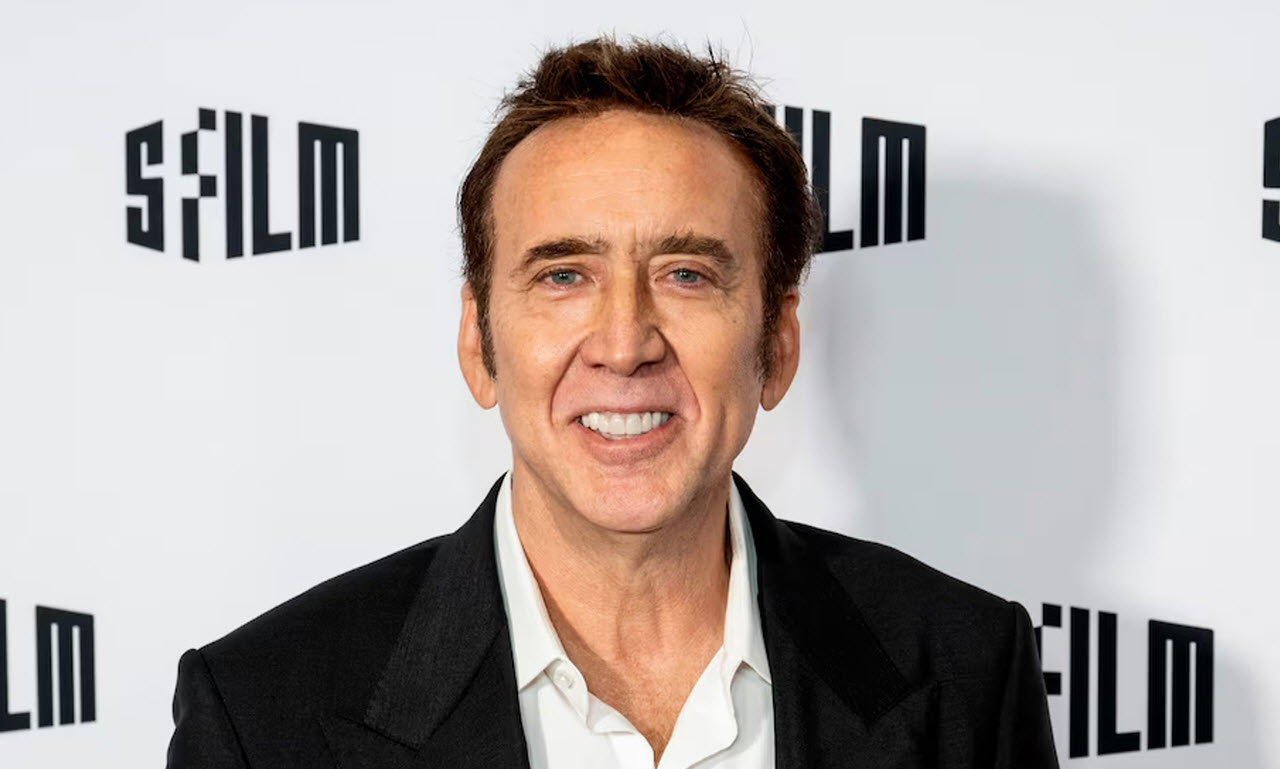
For example, Nicolas Cage may be an actor who was well known for the parts that he plays, but he also has been through some difficult times in his life. Recently, he was being made over for a serial murderer movie, Longlegs.

Cage was excited after he read the script and was ready to get together with a makeup artist. There was a lot that went into him looking the part for the movie, but he did it justice.

In order to get prepared for Longlegs, some intricate sculpting had to take place for the physical makeover. Part of the character’s look was plastic surgery of a very low quality, making him ugly and giving him a specific appearance.

Cage had to go through alterations to his own body and to develop the mannerisms necessary, including the singsong voice. He threw himself into the part and developed the character as no one else could.

This might be a surprise to you but the portrayal of Longlegs came somewhat naturally for Nicolas Cage. He was inspired by his mother, Joy Vogelsang, who struggled with depression and schizophrenia. He can remember seeing her speaking to walls when she was younger and it was something that was difficult for him.

He tried his hardest to understand what contributed to the mental illnesses his mother faced. In the end, he was able to put all of them into his performance for this unique movie.

Although Cage grew up in a middle-class family and had some wealthy family members, he still had to struggle to get to the top. He saw the success of others and decided that he was going to be successful as well.

His uncle, Francis Ford Coppola, also exposed him to a way of life that made him want success even more. It wasn’t all about the money, it was about the accomplishment.

When you watch the Longlegs movie and see how much he throws himself into the character, you can’t help but know that he was the right man for the job. In the strangest way, he owes it all to his mother

This Was The Craziest Golden Buzzer I’ve Ever Seen

We have seen so much talent in recent years that it is difficult to keep it all in mind. This talent can take on many different forms, from singing to acting, from magic to mimes.

Although we may enjoy talent in all of its forms, there is something special that happens when children get up and perform in front of us. Perhaps it is a nostalgic feeling that sweeps over us when we remember our own childhood and the ‘good old days’ when we enjoyed carefree times.

In addition, when children get together to perform as they do at the video below, it makes parents feel good from the inside out. Those feelings are real, and it can abuse us, cause us to feel true joy, or make us feel warm from the heart.

At times, these types of performances can go far beyond just entertaining us. They may overwhelm us with the degree of emotions that we are experiencing.

That is exactly what happened when the Flakefleet Primary School choir audition took place on Britain’s Got Talent. There was so much going on in the performance that it was difficult to follow at all, but the recreation of enjoying a happy school recess was more than the audience and judges could handle.

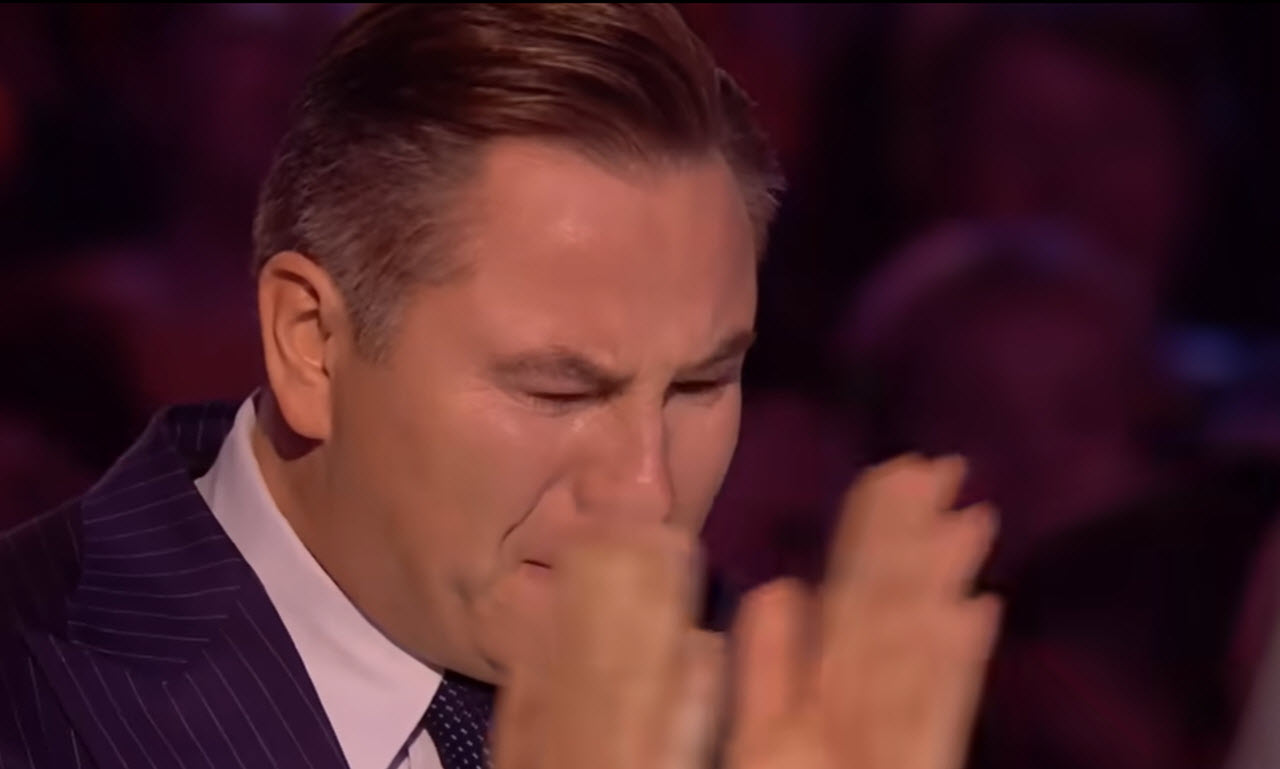
At first, you might think that it was just going to be a sinking act but it turned into utter chaos and ‘absolute joy’. It was enough that it brought tears to the judges and then, David Williams pressed the Golden Buzzer to send them straight to the semi finals.

You can see the performance for yourself in this video:

My Wife Left Me With The Kids When I Lost My Job But Years Later The Tables Would Turn

When we are a family, we want nothing more than to grow together and to become stronger as time passes. There are times, however, when things don’t quite work out as we planned.

It happened in the following story, when a man was going through a difficult financial struggle and his wife decided to leave. She left him alone to care for the children, and he struggled but he was the best father possible.

Later, he ran into his ex-wife at a coffee shop and things were surprising. How would he handle it? Read this story to find out.

When Anna walked out of our apartment with nothing but a suitcase and a cold, “I can’t do this anymore,” I was left standing there holding our four-year-old twins, Max and Lily.

My dignity was shattered, but not as much as my heart. I didn’t even get a second glance from her. It was like a switch had flipped. One minute, we were a family, and the next, I was alone with two kids and a mountain of bills.

This had all happened because I’d lost my job, and we lived in one of the most expensive cities in the country. I’d been a software engineer at a tech company that promised big returns, but some shady things happened, and it went bankrupt before we knew it. I went from a six-figure salary to unemployment checks overnight.

The day I told Anna the news, I saw the disappointment in her eyes. She was a marketing executive and one of the most put-together women I’d ever seen. Even after getting married, I never saw her hair out of place or a wrinkle on her clothes.

She even looked polished while giving birth to our children, like a real-life princess, and that’s what I used to love about her. But I never thought she’d leave during tough times.

That first year was pure hell. Between the crushing loneliness, the constant worry about money, and the exhaustion of juggling work and childcare, I felt like I was drowning.

I drove for ride-share companies at night and delivered groceries during the day. All the while, I was juggling childcare. Max and Lily were heartbroken and asked about their mother constantly.

I tried to explain as best as I could to four-year-olds that Mommy was gone for a while, but they didn’t seem to understand.

Luckily, my parents were nearby. They helped with the twins at night and whenever I needed them, but they couldn’t help financially. They were already retired and struggling with the rising cost of living.

Max and Lily were my lifeline, though. Their little arms wrapping around me at the end of a long day, their tiny voices saying, “We love you, Daddy,” kept me going. I couldn’t let them down. They deserved at least one parent willing to lay the world at their feet.

I’m happy that the second year after Anna left was much different. I landed a freelance coding project, and the client was so impressed with my abilities that he offered me a full-time remote position with his cybersecurity firm.

The pay wasn’t six figures, but it was solid. We moved to a cozier apartment, and I started caring for myself again. I hit the gym, cooked real meals, and created a routine for the kids. We weren’t just surviving anymore; we were thriving.

And then, exactly two years after Anna left, I saw her again.

I was at a café near our new place, catching up on work while Max and Lily were at preschool. The smell of roasted coffee beans filled the air, and the soft hum of conversations made it a good place to focus.

I didn’t expect to look up and see her.

She was sitting alone at a corner table, her head down, while tears streamed down her face. She didn’t look like the woman I remembered, the polished, confident marketing executive with designer clothes and perfect hair.

No, this woman looked worn. Her coat was faded, her hair dull, and the dark circles under her eyes told a story of sleepless nights.

For a moment, my heart clenched. This was the woman who abandoned us at our lowest.

She had left to make a better life for herself without a jobless husband and twins to take care of, right? That’s what I’d assume from her cold, short sentence back then.

We were burdens to her, and she wanted more.

So, what happened? Why was she crying at a random trendy coffee shop? I knew I shouldn’t care. I should ignore her, finish my drink, and leave immediately. But she was, after all, the mother of my children.

Unlike her, I wasn’t heartless. I still seemed to care.

She must have sensed my stare because she looked up. Her eyes met mine, and her expression shifted from shock to shame.

I could’ve stayed in place, but my body moved before I had time to consider it. Leaving my cup and laptop on the table, I walked toward the woman who had broken our home.

“Anna,” I said, clearing my throat. “What happened?”

Her eyes darted around as if searching for an escape. But there was none. “David,” she whispered, fidgeting with her hands. “I… I didn’t expect to see you here.”

“Clearly,” I said, pulling the chair across from her. “You left us. You walked out without any remorse. And now, two years later, I find you crying in a café? What’s going on?”

She looked down at the table, her fingers twisting until her knuckles turned white. “I made a mistake,” she finally said, loudly exhaling as if making a horrible and shameful confession.

I leaned back, crossing my arms. “A mistake? You think leaving your husband and kids was just a mistake?”

Her head shook as her eyes filled with fresh tears. “I know it’s not just a mistake. But I thought I… I thought I could do better on my own. It was all too much. The bills and not knowing how to survive. My money wasn’t enough for the life we’d led.”

“I know,” I nodded.

“I thought I could find a more fulfilling life, a better career… a better… I don’t know.”

“A better man?” I suggested.

Her head shook again. “No, no. I can’t explain it, but leaving you was so wrong. I lost my job almost immediately after. I survived on my savings; my parents sent me some money, but they cut me off after a few months. The people I thought were my friends disappeared when I needed them most.”

I stared as she began sobbing. My emotions were all over the place. I felt a small sense of vindication, as karma had acted almost immediately, but I also felt pity and hurt. We could have gone through this together and emerged much stronger if she had believed in me and our family.

“I miss you,” she croaked, sniffling. “I want to come back.”

I let her words hang in the air. Because no matter how bad I felt for her, I knew why she said those words.

“You miss me now that you have nothing,” I calmly said. “Convenient timing, don’t you think?”

Anna reached across the table, her hand hovering near mine. “David, please. I know I don’t deserve it, but I’ll do anything to make it right. I’ve been living in cheap apartments, hopping from one temp job to another. I’ve had time to think. I realize now what I lost.”

I pulled my hand back. “You didn’t think about Max and Lily, did you? Not once in two years. In fact, you haven’t even mentioned them since I sat down.”

The more I thought of it, the more disgusted I felt.

She flinched like I’d slapped her. “I thought about them too,” she whispered. “I just… I was ashamed. I didn’t know how to come back.”

I shook my head. “You made your choice, Anna. We’ve built a life without you. And it’s a good one. The kids are happy. I’m happy.”

“I’ll do anything,” she repeated desperately. “Please, David. Just give me a chance.”

I stood, turning my back to her. “No,” I said. “You made this decision. Despite what you’ve gone through, I see you haven’t reflected. You’re just worried about yourself. My kids need someone who’ll put them first.”

I returned to my table, snatched up my laptop, and left. The bell above the door sharply jingled as I pushed through it, but not before Anna’s sobs echoed through the quiet café.

At dinner that evening, I marveled at how much Max and Lily meant to me. My son was telling a story about a worm he found at school, and my daughter proudly showed me a picture she’d drawn.

“Daddy, look! It’s us at the park,” Lily said, handing me the drawing.

I smiled. “It’s perfect, sweetheart.”

Anna had given this up and ended up with nothing.

But after tucking the kids to bed and going to my room, I considered the consequences of walking away from their mother. A part of me knew that having her back in their lives could be beneficial in the long run.

Maybe, if she reached out and asked about them in the future, I would let her see them. That’s only if I witness real change in her. For now, I had to protect them.

You might think kids as young as mine don’t notice things, but they do. Yet, they are resilient as long as they know someone will always be there. I saw it in their laughter, in their easy affection. Therefore, our chapter with Anna was closed.

But life takes turns. I would focus on giving my children the secure, loving home they deserved and wait…

Jamie Foxx Does The Perfect Woman Voice On Jimmy Fallon’s Musical Impressions Generator

I think all of us have some type of talent that we could share with others but there are some people who have it to the extent that they can share it with the world. We may see them online on videos or perhaps on television on the talent shows. There are also others who have already become popular, regardless of whether they are singers, dancers or display any other type of talent. One of those individuals is Jamie Foxx. He is well known as an actor but he also has the ability to make people laugh for a variety of reasons.

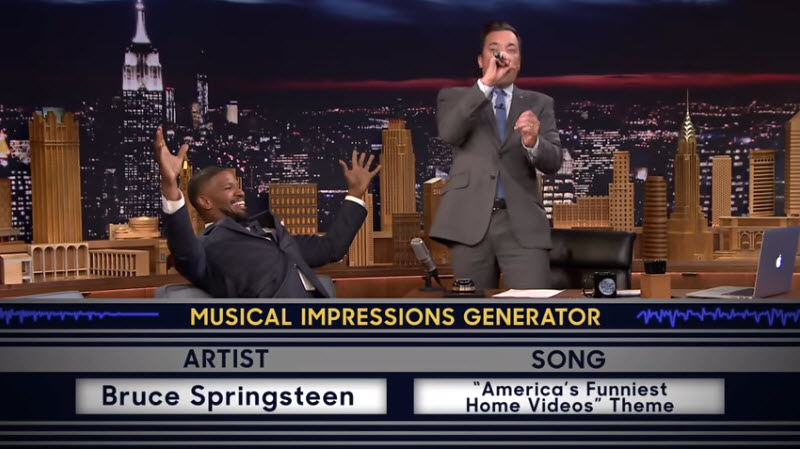
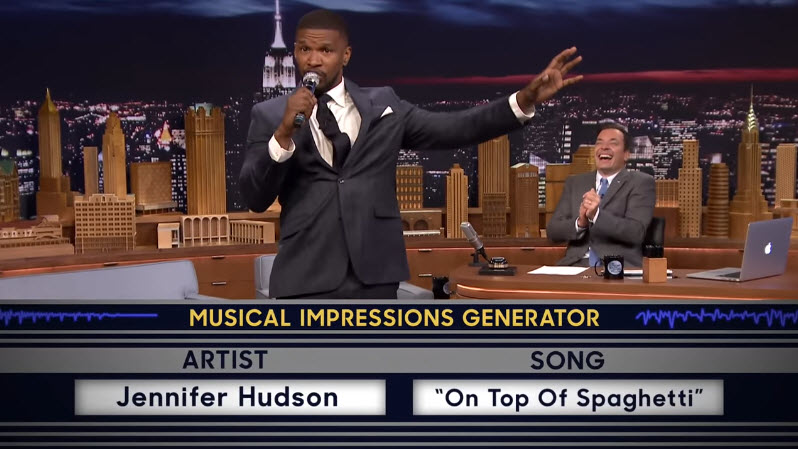
Jimmy Fallon is also somebody who is popular, primarily for his interviews on The Tonight Show. He just seems to have the ability to bring out the right questions so that his guests are interesting to a worldwide audience. Along with sitting and asking questions, he also has a number of skits that he does on the show and one of those is the “Wheel of Musical Impressions”. It’s a relatively simple game and most of his guests love playing with him. You push a button and it chooses a familiar song along with a well-known celebrity. It is then up to you to sing the song in the style of that celebrity. Things can get rather crazy quickly.

At first, Jamie Foxx has to sing a song in the style of Mick Jagger and from that point forward, things get even better. Jimmy Fallon also holds his own with a number of impressions, but it is the final display by Jamie Foxx that really gets the audience and Fallon going.

Most of us realize that Jamie Foxx is a very talented individual. He can act and is well known for other talents he has as well. Apparently, he can also use his comedic talents and singing ability to do some amazing things with his voice. Just listen to the video below and you will see exactly what I mean:

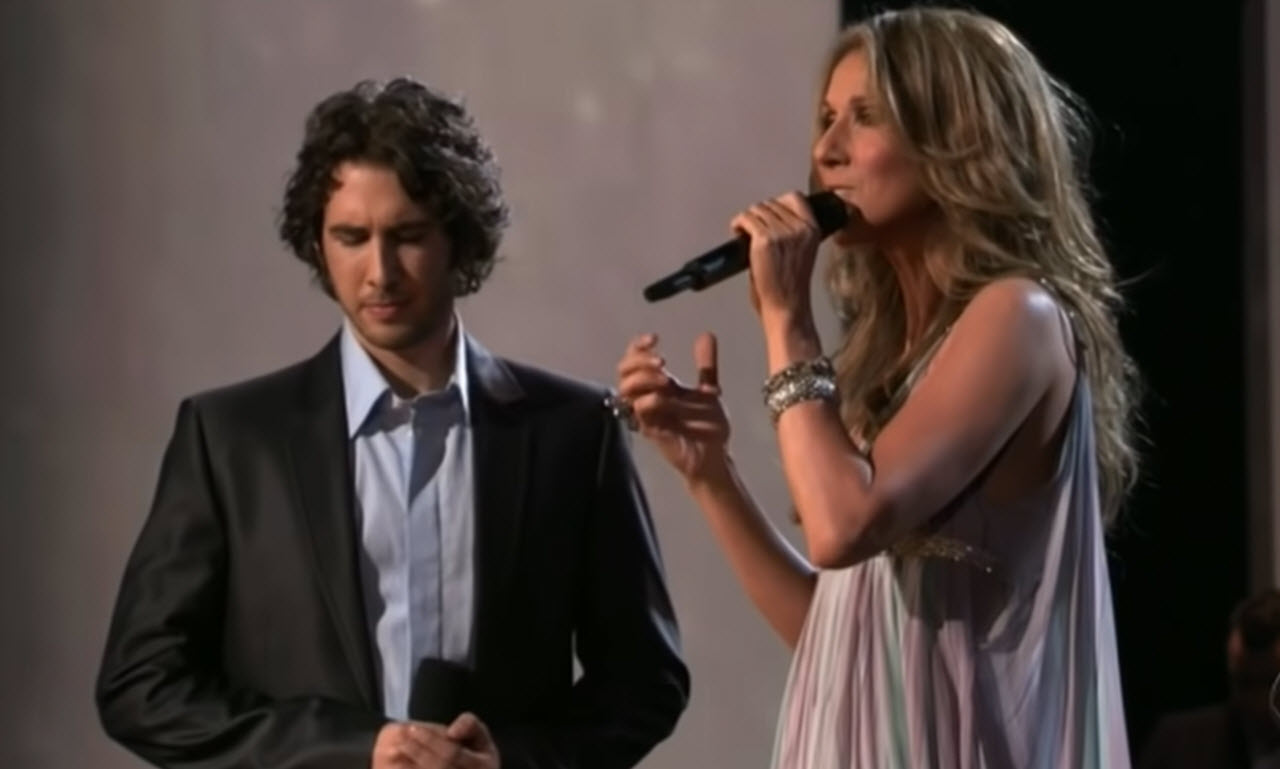
Celine Dion Thrills The Crowd With An Amazing Duet Of ‘The Prayer’

There have been many talented singers who have graced the stage before us in recent years, but Celine Dion is somebody who takes things to an entirely different level. She has a powerful voice but it is one that can also bring you to tears.

Celine Dion is amazing when she sings on her own but when she couples her voice with the power of another singer, it can really move an audience. That is how many people felt when they saw Celine on stage with Josh Groban.

It’s incredible to think that Josh Groban got his big break back in 1998. That was when David Foster, a music producer called him to ask him to stand in for the opera singer, Andrea Bocelli. It was for a rehearsal for the Grammy Awards, but it was enough to introduce him to the masses.

When he had the opportunity to sing with Celine Dion, he was not going to turn it down. You can hear them blending their voices together beautifully for a duet of the song, ‘The Prayer’ in the video below.