My sister served this to guests at a bbq, and everyone asked her for the recipe

There’s something incredibly comforting about the fragrant aroma that fills the air when hearty Polish sausage, tangy sauerkraut, and tender potatoes are slowly simmered together. This classic combination of flavors is a beloved staple in Polish cuisine,

bringing forth a symphony of tastes that warms not only the body but also the soul. Allow yourself to indulge in this delicious Slow Cooker Polish Sausage, Sauerkraut, and Potatoes recipe, and let its rich history and inviting flavors transport you to a cozy farmhouse kitchen in the heart of Poland.

Growing up, I was fortunate enough to spend my summers visiting family in Poland. The long days were filled with laughter, storytelling, and of course, an abundance of mouthwatering meals. One dish that always held a special place in my heart was the

Slow Cooker Polish Sausage, Sauerkraut, and Potatoes. I can still vividly recall the sight of my grandmother effortlessly preparing this recipe, her hands seasoned with generations of culinary wisdom. As the aroma infused every corner of the farmhouse,

it beckoned us to gather around the table, where we shared memories and created new ones. This recipe not only nourished our bodies but also served as a centerpiece for the cherished moments spent in the company of loved ones. The flavors and nostalgia tied to this dish are something to be treasured, and I urge you to save and make this recipe, allowing it to weave its own story in your kitchen.

Slow Cooker Polish Sausage, Sauerkraut, and Potatoes

Ingredients:
– 1 package of Polish sausage (about 1 to 1.5 pounds), cut into smaller pieces
– Sauerkraut (16-oz), drained
– 6 small potatoes, quartered
– 1 teaspoon caraway seeds
– 1 bay leaf

– 1/2 cup chicken or vegetable broth
– Salt and pepper to taste
Instructions:
1. In a greased slow cooker, place sauerkraut at bottom followed by potatoes and sausage. (Optional:

If you want max flavor, brown the sausage before putting them in.)
2. Dump broth, caraway seeds, and bay leaf into slow cooker. Season generously.
3. Cover the slow cooker and cook on low heat for 6-8 hours or on high heat for 3-4 hours.
Optional:

Add shredded cheese at the end!
Serve your Slow Cooker Polish Sausage, Sauerkraut, and Potatoes hot, garnished with fresh parsley leaves, if desired. The tender sausages, tangy sauerkraut, and perfectly cooked potatoes are a delightful combination that will warm you from the inside out.

Two Parents Who Turned Family Life Into a Bestseller Drama

Family is intended to be a haven, a place of warmth and comfort where we can feel protected and supported. But what happens when the ones we go upon for stability—our parents—become the cause of confusion and tension?

In this book, we look at real-life instances of parents whose actions transformed their children’s lives into something out of a dramatic soap opera.
Story 1:

My mother left us when I was 12. 25 years later, she suddenly reappeared, begging to meet my 16 y.o. daughter. My child agreed, even though I said, ’’Don’t! She will use you!’’

2 years later, my mother di:e:d, and my daughter got a call from an unknown number. Her face turned pale when she realized it was my mother’s lawyer. He said she needed to come urgently to sign some papers and collect some of her belongings.

My heart dropped when I discovered an old suitcase full of drawings—my childhood doodles, all neatly kept—as well as the small art projects I had done in school. All this time, I thought my mother didn’t care about me, and I was wrong. I am devastated that she wanted to reconcile, and I didn’t give her a chance. But at least my daughter was better than me; she grew close to her in her final years.

Former Congresswoman Freaks Out about Potentially Being Jailed after Over 100 J6 Files Discovered Missing

Former Congresswoman Liz Cheney, a former member of the January 6 Committee, pushed back after allegations surfaced that she destroyed over 100 files related to the committee’s investigation.

The controversy began after Donald Trump accused the committee on December 8 of destroying evidence that could have exonerated him. Rep. Barry Loudermilk, who reviewed the committee’s work, claimed key documents and videos were missing, saying it appeared they were deliberately not preserved, violating House rules.

Trump said, “They erased and destroyed all evidence,” in a criticism of Cheney and others. You are imprisoned in a civil case. Trump said, “They’ll have to look at that,” in response to a question about whether Cheney should be imprisoned. They are free to do as they please.

In retaliation, Cheney referred to Trump’s charges as “ridiculous and false.” “There is no factual or constitutional basis for what Trump is suggesting,” she said, calling his remarks a “attack on the rule of law” and denying any legal justification for punishment.

The disagreement draws attention to the ongoing hostilities surrounding the January 6 investigation and the way the evidence was handled.

Jim Caviezel Takes a Stand and Refuses to Work with Robert De Niro, Calling It “Awful and Ungodly

Actor Jim Caviezel has made news in the entertainment industry after calling renowned actor Robert De Niro a “awful, ungodly man” and refusing to work with him, in an unexpected turn of events. Hollywood has been rocked by the statement, which has sparked debates over how personal beliefs and professional relationships may coexist.

This article delves into the specifics of Caviezel’s audacious choice, the motivations for his rejection of working with De Niro, and the wider ramifications of such outspoken statements in the film industry.
Jim Caviezel, who gained notoriety for playing Jesus Christ in Mel Gibson’s “The Passion of the Christ,” is noted for his steadfast adherence to moral principles and his deep Christian convictions.

However, legendary actor Robert De Niro is renowned for his wide range of roles and candid opinions on a wide range of social and political topics. Caviezel’s reluctance to collaborate with De Niro has drawn attention to the conflict between individual morality and the teamwork involved in filmmaking.

When Caviezel was questioned about possible partnerships with De Niro in a recent interview, he made this statement. Without equivocation, the actor replied, “I won’t work with Robert De Niro.” He is a terrible, ungodly man.

The statement’s forceful wording attracted the attention of both fans and the media right once, raising concerns about the specifics of the supposed falling out between the two stars. Although Caviezel refrained from discussing specifics in the interview, it is clear that his choice is the result of a fundamental conflict of beliefs.

Caviezel’s vocal Christian beliefs and commitment to projects that share his moral compass make it plausible to believe that he feels there is a mismatch between De Niro’s public image and previous behaviour.

Caviezel’s statement lacked detail, which led to conjecture and increased public curiosity in the underlying dynamics. Actors expressing their public opinions on a range of topics, such as refusing to collaborate with specific people, are nothing new in the entertainment industry.

But there have been conflicting responses to Caviezel’s audacious declaration. Some commend him for sticking to his convictions, viewing it as an uncommon display of sincerity in a field that is frequently attacked for its moral relativism. Some argue that making such public statements is foolish and could restrict future career options as well as maintain industry divide.

The fact that Caviezel declined to collaborate with De Niro highlights more significant issues regarding how performers manage their personal convictions in the cooperative and frequently divisive world of Hollywood. Although diversity of opinion and expression has historically been beneficial to the profession, there are an increasing number of cases where players create boundaries based on their own convictions.

The episode captures the changing face of Hollywood, where people are willing to stand by their values even if doing so puts them in jeopardy with their careers. There have been cases in the entertainment industry where public remarks made by actors have helped or hurt their careers. Caviezel’s refusal to collaborate with De Niro might win over like-minded people who respect his steadfast adherence to his convictions

A Friend Told Me That Drinking Pickle Juice Can Help With Muscle Cramps

Chronic liver disease, or cirrhosis, is frequently brought on by extreme alcohol misuse and can be fatal.

Additionally, it is rife with severe symptoms that can negatively affect the quality of life for individuals who have it.

“Patients with cirrhosis experience a multitude of challenges, like poor sleep patterns, frailty and muscle cramps,” said Elliot Tapper, M.D., a hepatologist and associate professor of internal medicine at Michigan Medicine. “And even though they are suffering, patients don’t always tell their providers that they’re experiencing muscle cramps.”

Interestingly, regardless of the severity of their disease, two out of every three people with cirrhosis have some form of muscle cramp.

Source: Pexels
“We surveyed hundreds of people with cirrhosis. We found, compared to other cirrhosis-related symptoms, that muscle cramps had the highest impact on their daily quality of life,” said Tapper. “This is worrisome, given that cramps can cause pain, interfere with sleep and significantly limit one’s mobility.”

Because of the “extremely limited” available treatments for cramps, Tapper and a group of other physicians decided to investigate the potential benefits of pickle juice consumption for cirrhotic cramps. The American Journal of Gastroenterology recently published its findings.

“In previous studies, just one tablespoon of pickle juice has been shown to stop experimentally-induced cramps pretty effectively,” said Tapper. “It’s the acid in the brine that triggers nerves in the back of the throat, which then turns the cramp off. So, it made sense for us to explore this new angle of cirrhotic cramps.”

The study’s participants included 82 cirrhosis patients in total. Additionally, all participants reported having severe cramping in their muscles more than four times throughout the previous month.

Patients were randomly assigned to either the pickle juice group or the control group, which sipped tap water, for the duration of the 28-day study.

“Individuals in the tap water arm were instructed to use tap water during the study, while individuals within the pickle juice arm were asked to purchase jars of pickles of their choice. As long as they were dill or kosher pickles—not sweetened and/or bread and butter,” said Tapper.

“Patients with cirrhosis experience a multitude of things, like poor sleep patterns, frailty and muscle cramps. And patients don’t always tell their providers that they’re experiencing muscle cramps.”

– M.D. Elliot Tapper.

After that, during the research window, the patients were instructed to note the time, place, and length of their muscle cramps.

Additionally, when their cramping bouts started, they were told to take a tiny sip of tap water or one tablespoon of pickle juice.

“We also conducted follow-up assessments with our patients, in which a text service sent them automated messages on a pre-set schedule to determine cramp frequency and severity,” said Tapper. “This method also assessed how frequently they were consuming tap water or pickle juice, per the study’s guidelines.”

By lessening the intensity of muscle cramping, the researchers discovered that pickle juice outperformed tap water.

“More patients in the pickle juice arm reported that their cramps were stopped by the intervention – 69% compared to 40% in the tap water arm,” said Tapper. “But the pickle juice didn’t improve overall quality of life, maybe because it couldn’t prevent the cramps.”

According to Tapper, pickle juice is a “low-cost, widely available and safe first-line therapy for cirrhotic cramping” in comparison to other current treatments for muscle cramps.

“If there is any takeaway from this study, I want people to know that muscle cramps are quite common and patients with cirrhosis have multiple unmet needs that are unnecessarily diminishing their quality of life,” said Tapper. “These findings excite me because we have something simple here that might help. Hope is out there.”

A Love Stitched Through Time: My Husband Crocheted Me a Wedding Dress at 70

Today was magical—my 70th birthday and 47th wedding anniversary, two milestones intertwining in the most beautiful way. My husband, always creative, outdid himself this year.

For weeks, I noticed him sneaking off to his workshop, claiming to be “tinkering.” I didn’t think much of it—he’s always had little projects. But today, during our family celebration, he stood before me with a look I hadn’t seen since he proposed and presented a large wrapped box. Inside was a wedding dress—hand-crocheted by him. Every detail, every loop, was crafted with love.

“You made this?” I whispered, overwhelmed.

“I wanted to give you something that showed how much these years mean to me,” he said, his eyes filled with pride. Tears filled mine as I hugged him. The dress wasn’t just beautiful—it was a symbol of our shared love and devotion.

The surprises continued with a vow renewal in the garden, surrounded by our children and grandchildren. As I slipped into the dress, it felt like stepping into the past, enhanced by the years we’d shared. Hand in hand, we recited our vows, now even more meaningful.

But then, Marcia, my brother’s wife, scoffed. “A crochet wedding dress at 70? Shouldn’t you wear something more dignified?”

Her words stung, but my son quickly defended us. “This dress isn’t just a dress. It’s a symbol of love, patience, and dedication. It represents everything my parents have built together.”

His support, along with the love of my children and grandchildren, reminded me that love matters more than judgment. Later, as I sat with my husband, watching the sunset, I realized the dress—like our marriage—was uniquely ours. It didn’t matter what anyone else thought.

So, I ask you: Is a crochet wedding dress inappropriate at 70, or does love transcend age and expectations?

A Night to Forget: Bob’s Hilarious Drunken Homecoming Mishap

A Night of Whiskey and Woes: Bob’s Hilarious Homecoming Blunder
After one too many glasses of whiskey, Bob began his wobbly journey home, determined to sneak in without waking his wife, Kathleen. The streets seemed to tilt and sway, but Bob, fueled by liquid courage, concocted a “foolproof” plan: tiptoe upstairs, slip into bed, and act innocent. What followed was a series of missteps that would become legendary in their household.

A Bumpy Entry

Bob fumbled with his keys for what felt like an eternity before finally making it inside. As he attempted his stealthy ascent up the stairs, his coordination betrayed him. Halfway up, he misjudged a step and went tumbling backward with a thunderous crash.

To make matters worse, the two miniature whiskey bottles he had tucked into his back pockets shattered on impact. The sharp shards and sticky liquor left his trousers in ruins and added a few stinging cuts to his list of troubles.

Band-Aids Gone Rogue

Determined not to wake Kathleen, Bob crawled to the hallway mirror to survey the damage. The reflection wasn’t promising: small cuts and smears of blood covered his back. But Bob, ever the problem-solver, grabbed a box of Band-Aids from a nearby cabinet.

What followed was a comedy of drunken logic. Unable to see his wounds properly, Bob began sticking Band-Aids onto what he assumed were the injured spots. His aim, however, left much to be desired. By the time he was done, the mirror was adorned with a patchwork of Band-Aids, while his actual cuts remained untouched.

Satisfied with his handiwork, Bob stumbled to bed, blissfully unaware of the chaos he had left behind.

The Morning After

Bob awoke to Kathleen standing over him, arms crossed and an amused smirk on her face. “Rough night, was it?” she asked, her voice dripping with sarcasm.

Feigning innocence, Bob replied, “What makes you say that?”

Kathleen raised an eyebrow. “Oh, let’s see… the broken glass on the stairs, the blood trail to the hallway, or the Band-Aids decorating the mirror instead of your wounds?”

Bob groaned as fragmented memories of the night came rushing back. “I was just trying to fix myself up,” he mumbled.

“And,” Kathleen added with a grin, “who in their right mind keeps whiskey in their back pockets? Honestly, Bob, you practically set yourself up for disaster!”

Laughter Over Lessons

Despite her exasperation, Kathleen couldn’t stay mad for long. Bob’s antics, while absurd, never failed to entertain. Soon, they were both laughing as they cleaned up the aftermath of his escapade.

“Next time,” Kathleen teased, “leave the whiskey at the bar. Or at least leave the stairs alone!”

Bob grinned sheepishly, already plotting a more graceful return on his next night out.

A Tale for the Ages

What started as a whiskey-fueled fiasco became one of their favorite stories to share with friends and family. While Bob may have lost the battle with the staircase and the Band-Aids, he gained a tale that would keep Kathleen—and everyone else—laughing for years to come.

Lila Hart
Lila Hart is a dedicated Digital Archivist and Research Specialist with a keen eye for preserving and curating meaningful content. At TheArchivists, she specializes in organizing and managing digital archives, ensuring that valuable stories and historical moments are accessible for generations to come.

Lila earned her degree in History and Archival Studies from the University of Edinburgh, where she cultivated her passion for documenting the past and preserving cultural heritage. Her expertise lies in combining traditional archival techniques with modern digital tools, allowing her to create comprehensive and engaging collections that resonate with audiences worldwide.

At TheArchivists, Lila is known for her meticulous attention to detail and her ability to uncover hidden gems within extensive archives. Her work is praised for its depth, authenticity, and contribution to the preservation of knowledge in the digital age.

Driven by a commitment to preserving stories that matter, Lila is passionate about exploring the intersection of history and technology. Her goal is to ensure that every piece of content she handles reflects the richness of human experiences and remains a source of inspiration for years to come.

My Fiancé’s Daughter Claims My Dog ‘Terrified’ Her – Should I Rehome My Fur Baby?

When Ivana’s fiancé’s daughter demanded that her dog be removed from the home due to his “aggression,” Ivana was crushed. Forced to choose between love and loyalty, she prepared to make a heartbreaking decision — until a shocking discovery revealed there was more to the story than she ever imagined.

When my fiancé Robert proposed, I thought my dream of building a family was finally coming true. I’d been in love with him for over two years, and his 8-year-old daughter, Hailey, had lost her mom in a car accident just three years ago. From the start, I knew how hard it was for her, and I was determined to be the emotional support she needed.

“Do you think Mommy would be mad if I liked Ivana?” Hailey had asked Robert one evening. I’d overheard them from the kitchen, my heart catching in my throat.

Robert’s voice was gentle but firm. “Your mommy would want you to be happy, sweetheart. She loved you so much that she’d want you to have all the love in the world.”

“Even if it’s from someone else?” Hailey’s question hung in the air. “From someone who’s not my Mommy?”

“Especially then,” Robert replied, his voice laced with emotion.

In the beginning, Hailey and I got along wonderfully. She’d play with Bo, my beloved German Shepherd, for hours, sometimes drawing pictures of the three of us together. Once, she even hugged me, whispering, “I like you, Ivana.”

Those small moments felt like stepping stones to something bigger… a future as a real family. But that changed the day Robert announced our engagement.

Hailey’s smiles grew less frequent, her chatter turned to silence, and she avoided me at every turn. At first, it was small things like ignoring me at dinner or keeping her eyes glued to her coloring book whenever I tried to talk to her. I brushed it off, thinking she just needed time to adjust.

I was wrong.

“Your dog scared me! He growled and tried to bite me!” Hailey’s voice cut through the living room like a blade one evening.

Robert and I froze, turning to where Bo stood, wagging his tail and his ears perked, oblivious to the accusation.

“Hailey,” I said softly, kneeling down to meet her eyes. “You’ve been friends with Bo for over a year. He’s never hurt anyone before. Are you sure he growled at you?”

She crossed her arms. “He did. He growled, and he tried to bite me! I’m scared of him.”

“But sweetie,” I pleaded, my voice trembling, “just yesterday you were sharing your sandwich with him. Remember how gentle he was? Bo loves you, honey.”

“That was before!” she shouted, tears streaming down her face. “I’m scared of him. Take him away. Please!”

Her words felt like a punch to the gut. “Hailey, Bo would never —”

I glanced at Robert, hoping for some reassurance, but his brow was furrowed in concern as Hailey ran to him, throwing her arms around his waist.

“It’s okay, sweetie,” he murmured, rubbing her back. “You’re safe now.”

I wanted to argue and defend Bo, but the lump in my throat made it impossible.

That night, I barely slept. Robert sat beside me, staring at the ceiling. “I don’t know what to do,” he finally said.

“Neither do I,” I admitted. “Bo has never been aggressive. He’s always been gentle, especially with Hailey.”

“She’s scared, Ivana,” Robert said. “As her dad, I have to take her feelings seriously.”

“And what about my feelings, Rob?” My voice cracked despite my best effort to stay calm. “Bo is family too. He’s been with me through everything — my parent’s divorce, moving cities, meeting you…” I choked back a sob. “He was there when I thought I’d never find love again.”

Robert reached for my hand in the darkness. “I know, honey. I know how much he means to you.”

“Then how can you ask me to choose?” I whispered, pulling away. “It’s like asking me to cut out a piece of my heart.”

Robert sighed, his silence saying more than words ever could. “We have to make a choice here, Ivy,” he shattered the stillness. “I know how much Bo means to you. But if it’s for our daughter’s happiness, we must be ready to do anything.”

“Anything? But Rob, how could you say this when —”

“Goodnight,” he said, cutting me off. I hugged the pillow and cried, my tears soaking the soft fabric.

By morning, I had made the most excruciating decision of my life. “I’ll take Bo to the shelter,” I told Robert. “Maybe they can find him a new home.”

“Ivana, I’m so sorry,” he mumbled as I walked past him, ushering my beloved pet to the car.

Bo sat quietly in the passenger seat, his big brown eyes filled with trust as I gripped the steering wheel. Tears streamed down my face, blurring my vision. “I’m so sorry,” I whispered, reaching over to scratch his head. “You’ve been the best friend anyone could ask for, and I’m betraying you.”

Bo whined softly, pressing his nose against my hand.

“Remember when we first met at the shelter?” I sobbed, my fingers tangling in his fur. “You were so small and scared… but you still wagged your tail when I walked by. You chose me, didn’t you? And now I’m choosing to leave you.”

He licked my hand, as calm and loving as ever.

Just as I was about to start the engine, Robert came running down the driveway, waving his arms. “WAIT!” he shouted. “IVANA, DON’T…”

I rolled down the window, my heart pounding. “What’s wrong?”

“I SAW THE FOOTAGE!” he exclaimed, yanking open the car door.

“What footage?” I asked, confused.

“Come back inside. You need to see this.”

Robert led me to his laptop, where he pulled up footage from our front door camera. The video showed Hailey sitting on the porch with Bo, scratching his ears like she always did. Then her voice came through the audio:

“I’LL TELL THEM YOU BARKED AT ME! AND SHE’LL TAKE YOU AND LEAVE ME AND MY DADDY! I’M SORRY, BO. I LOVE YOU. BUT I HAVE TO DO THIS.”

My heart sank as I watched Bo wag his tail, completely unaware of the betrayal.

“She lied,” I whispered, the realization hitting like a punch. My legs gave way, and I sank into the chair. “I almost gave him up because of a lie.”

Robert ran his hands through his hair, anguish written across his face. “I should have known better. I should have trusted you more.”

“How could she do this?” I asked, my voice breaking. “I thought we were making progress. I thought…”

“She’s hurt,” Robert said softly, kneeling beside me. “But this… this isn’t the way I raised her. We need to help her understand the consequences of her actions.”

“I understand her fear,” I replied, wiping my tears. “But I need to know if we can move past this. All of us.”

“We can,” Robert assured me, taking my hands in his. “We have to. For Hailey. For us.”

That evening, we sat Hailey down in the living room. She fidgeted on the couch, avoiding our eyes.

“Hailey,” Robert began gently, “we know what happened with Bo. We saw the video.”

Her head shot up, her face pale. “Daddy, I didn’t mean to —”

“It’s okay,” I interrupted, keeping my tone soft. “We just want to know why you felt like you had to do that.”

Tears welled up in her eyes. “I thought if Bo went away, you’d go away too,” she admitted, her voice trembling. “I thought you were going to take my daddy away from me!”

“Oh, sweetheart,” Robert’s voice cracked as he pulled her into his arms. “No one could ever take me away from you. Do you know why?”

Hailey shook her head against his chest.

“Because you’re a part of my heart,” he explained, stroking her hair. “Just like your mommy is. And that part? It’s yours forever.”

“But what about Ivana?” Hailey asked, her voice small and uncertain.

“Honey,” I said gently, moving closer, “I’m not trying to replace your mom. I know how special she was… and how special she still is. I just want to add my love to all the love you already have. Is that okay?”

She looked at me through tear-filled eyes. “You promise you won’t make Daddy forget about Mommy?”

“I promise,” I whispered as warm tears rolled down my cheeks. “We’ll always remember her together.”

Robert pulled her into his arms and held her tightly. “Sweetheart, no one is taking me away from you. No one could ever replace you in my heart. You’re my universe, honey. And Ivana… she’s just going to be a part of it, that’s all.”

I leaned closer, my voice breaking. “Hailey, I love your dad. And I care about you, too. You’ll always be his daughter, no matter what.”

She sobbed into Robert’s chest, the weight of her fear finally spilling out.

The next day, Robert and I decided to teach Hailey an important lesson. WE WENT TO THE ANIMAL SHELTER TOGETHER — not to leave Bo there, but to show her what life is like for pets who don’t have homes.

Walking through rows of cages, Hailey’s demeanor softened as she saw scared, lonely animals staring out at us.

“Why are they all sad… and alone?” she asked, her voice trembling as she gripped my hand tightly.

“These dogs and cats were left behind by people who didn’t want them anymore,” I explained gently. “Is this what you wanted for Bo?”

Her eyes filled with tears as she shook her head. “No. I didn’t know… I didn’t think…”

“Sometimes our actions can hurt others more than we realize,” Robert added softly. “Remember how sad you felt when you thought about Bo leaving?”

Hailey nodded, wiping her eyes. “Like when Mommy left and never came back?”

The question caught us both off guard. Robert knelt beside her and whispered, “Sweetheart, your mommy didn’t choose to leave you. She loved you more than anything in the world.”

“But I almost made Bo leave,” Hailey said, her lower lip trembling. “I would have been just like the bad people who left these poor animals here.”

“Hey, come here… it’s okay, sweetie,” I pulled her into a hug.

We spent the afternoon VOLUNTEERING AT THE SHELTER, feeding and playing with the animals. By the time we left, Hailey seemed lighter, and more thoughtful.

Grieving Mom Discovers Baby Toys on Her 21-Year-Old Son’s Grave Every Day After His Death — A Story to Remember

Every day since her 21-year-old son’s untimely death, Margaret visited his grave to feel close to him. But when she began finding baby toys left behind, she unraveled a shocking truth about her son’s hidden life.

Margaret had always been proud of her son, Ethan. He was kind, creative, and full of dreams. But as he grew older, their relationship became strained. Ethan wanted to pursue a career in music, a dream Margaret’s husband, Richard, dismissed as impractical and irresponsible.

“Music? That’s not a career, Ethan,” Richard scoffed during one of their heated arguments. “You need to think about your future. You’ll go to law school, just like your grandfather and me.”

“Dad, I’m not you,” Ethan argued. “I don’t want to spend my life doing something I hate. Music makes me happy, and I’m good at it! Why can’t you just support me?”

“Because life isn’t about what makes you happy,” Richard snapped. “It’s about stability and responsibility. If you live under my roof, you’ll follow my rules. If you don’t like it, you’re welcome to leave.”

Margaret, caught in the middle, tried to mediate. “Ethan, your father’s just trying to protect you. He wants you to have a secure future.”

“By making me miserable?” Ethan shot back. “You should both want me to live my life, not yours!”

That night, after another heated exchange, Ethan packed his bags and left. Margaret begged him to stay, but his mind was made up. “You’ll see, Mom,” he said, standing in the doorway. “I’ll make something of myself, and you’ll regret not believing in me.”

Three years passed without a word from Ethan. Margaret tried reaching out countless times, but her calls went unanswered. She worried about him constantly, wondering where he was, what he was doing, and if he was safe.

One morning, as she prepared breakfast, her phone rang. The voice on the other end of the line delivered the devastating news: Ethan had died in a motorcycle accident.

Margaret’s world shattered. She collapsed onto the floor, clutching the phone as tears streamed down her face. Richard, though stoic by nature, was equally devastated. Together, they traveled to identify Ethan’s body and arranged his funeral in the city where he had lived.

After the funeral, Margaret visited Ethan’s grave every day, sitting by the headstone and talking to her son as though he could hear her. She often blamed herself for not supporting him and wished she could go back and change everything.

One day, as she placed fresh flowers on his grave, she noticed a small stuffed bear sitting next to the headstone. Assuming it had been left there by mistake, she moved it aside. But the next day, the bear was back—this time accompanied by a toy car.

Puzzled, Margaret asked the cemetery caretaker if he had seen anyone leaving the toys. He shook his head. “No one’s been around that I’ve noticed,” he said.

The mystery gnawed at her, and she resolved to find out who was leaving the toys.

The following day, Margaret arrived earlier than usual and waited by a nearby bench. Hours passed, and just as she was about to give up, she saw a young woman approach Ethan’s grave, carrying a baby in her arms.

Margaret hesitated for a moment before stepping forward. “Excuse me,” she said softly. “Did you know my son?”

The woman turned, her face pale with surprise. “You’re Ethan’s mom?” she asked, her voice trembling.

“Yes,” Margaret replied. “I’ve seen the toys left here. Are you the one bringing them?”

Tears welled up in the young woman’s eyes. “I am,” she said, her voice breaking. “My name is Rachel. I’m… I was Ethan’s girlfriend. And this is Liam—your grandson.”

Margaret’s breath caught in her throat as she looked at the baby. He had Ethan’s eyes, his curls, and even the same dimpled smile. “Grandson?” she whispered, her voice barely audible.

Rachel and Margaret sat on a nearby bench as Rachel recounted her story. She and Ethan had met when he moved to her city. Struggling to make ends meet, Ethan worked part-time as a waiter while pursuing his music dreams. Despite his challenges, Rachel said, he was always optimistic, always determined.

“When I got pregnant, Ethan was over the moon,” Rachel said, smiling through her tears. “He wrote a song for Liam, saying he wanted him to grow up knowing it’s okay to chase your dreams. He planned to send it to producers, and he thought it could be his big break.”

But tragedy struck before Ethan could see those dreams come true. The day of his accident was the day Rachel went into labor. She woke up in the hospital to the devastating news that Ethan was gone.

“The toys I’ve been leaving were the ones Ethan bought for Liam,” Rachel explained. “I wanted him to know his father was loved and that he was a good man.”

Margaret’s heart broke as she listened. She had already lost her son; she couldn’t bear the thought of losing her grandson, too. “Rachel,” she said gently, “you and Liam are part of this family. Please, come home with me. Let us be there for you.”

Rachel hesitated, unsure if she should accept. But Margaret insisted, promising to honor Ethan’s memory by supporting the family he had left behind.

In time, Rachel and Liam moved in with Margaret and Richard. The couple found solace in their grandson, and Richard, once cold and distant, became a doting grandfather. Watching him play with Liam brought warmth back into Margaret’s heart and helped heal the rift in their marriage.

Margaret also worked with Rachel to get Ethan’s song professionally produced. When it was released, it gained significant recognition, a testament to Ethan’s talent and the dreams he never stopped chasing.

Today, Liam is a bright and curious five-year-old who proudly tells everyone about his father, the musician. And Margaret and Richard, once blinded by their expectations, now embrace Liam’s dreams as fiercely as they should have embraced Ethan’s.

What Can We Learn from This Story?
Support is the foundation of love. Ethan’s parents’ refusal to support his dreams created a rift that could never be repaired. Encouragement and open-mindedness can bridge gaps and strengthen relationships.
Healing comes through acceptance. By welcoming Rachel and Liam into their lives, Margaret and Richard found a way to honor Ethan’s memory and heal as a family.
Chasing dreams requires courage. Ethan’s determination to follow his passion left a legacy that inspired others, proving that staying true to oneself can make a lasting impact.

The True Meaning Behind “Barn Stars”

A cute decoration that you can often find above the door at the top of a barn is a barn star.

You can paint them on or make them out of metal stars. They are sometimes replaced with hex signs or quilt blocks instead.

These things are there for a reason, and it’s probably not what you thought.

It turns out that German-American farmers think Barn stars are very important.

They are put on top of barns to keep bad things away or to help the farmer’s crops grow well.

It’s interesting that each one can be a different color and mean a different thing.

For example, a green barn star means that crops will grow well and will be fertile. But blue or black barn stars mean that the farmer, their family, and their goods are safe.

Brown, on the other hand, stands for friendship. The history of barn stars is interesting.

Barn Stars

A barn star was first put on a barn in the 1830s. These days, barn stars are kind of trendy.

Each symbol is a change made to German folk art from Europe that was brought over.

The Amish are known for living very simple lives, away from modern technology and pop culture.

The practice of barn stars is just one of many that have been passed down through the years in this area.

What’s even more interesting is that for someone whose family has strong ties to Pennsylvania Dutch values, things that are often linked have very different meanings.

Patrick Donmoyer said it’s important to know that there are two practices that run parallel to each other: “There are the barn stars and then there are the hex signs.”

Barn Stars May Offer Protection

Donmoyer is in charge of the Pennsylvania German Cultural Heritage Center at Kutztown University.

He said that many of the hex signs showed up in other places, like marriage licenses, to bring luck to people who were just married. Or on grave signs to help the dead find peace in the next life.

Superstitions have been around for thousands of years, and they have all changed over time to fit the wants of a world population that is always shifting.

Surprisingly, barn stars did not have the “power” or meaning that most people think they do now.

Indeed, Donmoyer says, “These were part of the agricultural way of life.” They were things that weren’t always linked to supernatural thoughts or events.

For the record, hex signs got their start on barns almost 100 years after the barn stars.

Hex Signs aren’t the Same

Wallace Nutting, an artist from New England, went to the Pennsylvania Dutch Country in 1924 and “misinterpreted” the original quilt squares or barn stars to make the hex signs.

Donmoyer said, “He was talking about something real, but what he was talking about was missing.”

It wasn’t the stars on the barn that he was talking about; it was this idea of the hexenfoos. He moved the two parts of the custom around a bit.

By the 1950s, these patterns were being changed again and again, and they were now a popular place for tourists to visit.

Barn stars and quilt squares on barns all over Pennsylvania Dutch country are a sign of the creativity, hard work, and traditions of a culture that has long confused the rest of the world.

These signs reveal inherited cultural and family customs.

So, even though many people thought barn stars kept evil away, the Pennsylvania Dutch used them to remember their ancestors and the place where they came from.

There is something similar in many cultures

As was already said, superstitions have been around for a very long time.

People believe that they can help keep evil away, stop bad karma, and often bring wealth and happiness.

It shouldn’t be a wonder that many tribes and nations have their own old symbols that have been changed to protect homes and families from harm, like barn stars.

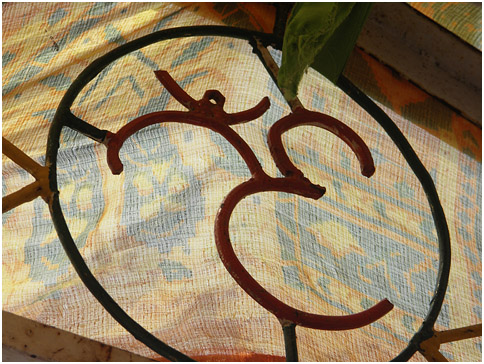
Om or Aum symbol of Hinduism and Buddhism

For example, the sign Om is often used to protect people while they meditate and do other spiritual activities.

A lot of people have heard the word or sound, but the word itself can also mean something visual.

It is thought to “purify” the mind and body, finding a happy balance between peace and the difficulties of life.

The Eye of Horus

The Eye of Horus in Egypt is another example.

People believe that the powerful symbol, which can be found on Egyptian wall art or jewelry, can heal and protect.

Or the Hamsa Hand, which is thought to keep away bad things and bring health, wealth, and luck. It lives in the Mediterranean and the Middle East.

Turtle


The “Let It Stand” totem pole with the turtle carvings can be seen at the East Gate of Algonquin Park in Ontario, Canada, on November 4, 2018.

Turtles are also a respected symbol, which I find very interesting.

Native American and African groups see the turtle as a sign of longevity, wisdom, fertility, and being rooted.

Helm of Awe

The Hood of Fear or the Hood of Awe, a modern Icelandic magical symbol with the same name as a thing from Norse mythology.

Last but not least, the Norse symbol called the Helm of Awe is said to protect fighters in battle and make their enemies afraid.

The same but different

People from different countries haven’t been able to talk to each other, but advances in technology have made it easier to see how many countries and cultures are alike.

Each of these symbols has its own name and meaning.

Still, each sign is seen as a promise of safety, wealth, and good health, and it reminds us of what our ancestors wanted for our families and community in the future.